can't really remember when I first heard of the Day of the Dead, think it was High school Spanish class, like in the 60's !! Never I did know much about it, until I finally looked it up.
The Difference Between Halloween and Dia de los Muertos
The Day of the Dead celebrations may coincide with Halloween and seem similar. Both celebrations involve costumes, skeletons and treats as well as graveyards and death imagery.
But according to HalloweenHistory.org, there are some big differences.
 The Day of the Dead holiday, referred to in Spanish as Dia de los Muertos due to its South American origin, is about celebrating the dead, not being afraid of the dead. It’s a holiday for people to honor their ancestors and loved ones who have passed away and invite those spirits back into their homes to be part of the family once more. It’s a celebration of family and a show of respect for those who have passed away.
The practice of celebrating the dead goes back thousands of years in South American cultures. In the Aztec culture the celebration of the dead was in August and went on for a month. During that time the people paid tribute to Catrina, the Goddess of Death, who was portrayed as a skeleton.
Rather than displaying grim or gory decorations, Day of the Dead celebrations involve paying respects to loved ones. Families tend graves and leave offerings, plant flowers and trees, wear the clothes of their deceased relatives, and build altars in their homes to honor their loved ones.
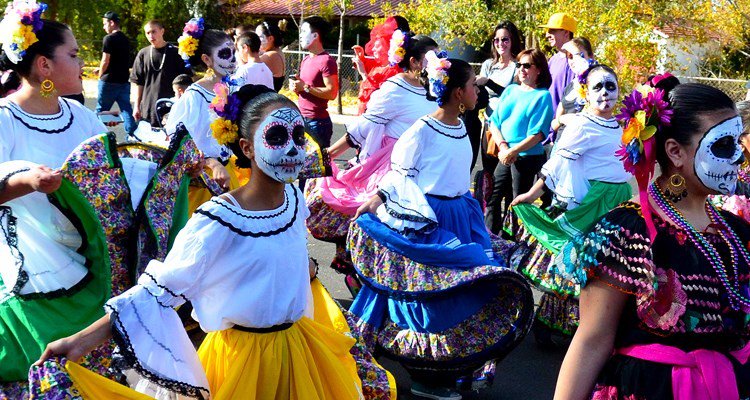
Perhaps the most popular part of the holiday is people turning themselves into skeletons using elaborate makeup and masks. The skeletal appearance highlighted with flowers, bright colors and artwork is a striking image that has now become an icon of the Day of the Dead. These looks are based partly on the decorated sugar skulls that are left on altars as offerings to the spirits and as well as to Catrina.
I must say, that I much prefer Day of the Dead celebrations to Halloween in my older age. Part of it is that I’ve grown more disturbed by the evolution – or perhaps devolution – of Halloween decorations into what are sometimes quite offensive portrayals of horror. But I have a daughter who delights in dressing up, attending the town parade and indulging in candy. I do enjoy those innocent pleasures. So I will happily take my 8-year-old daughter through our neighborhood to ask for candy on Halloween. But I will also honor the memory of my mother in the coming days.
Will you celebrate anyone? What are your family’s traditions around Day of the Dead and Halloween?
from ThinkTank12 blog.
/DayOfTheDead_1500-56a6dfae5f9b58b7d0e53485.jpg)
But according to HalloweenHistory.org, there are some big differences.
The practice of celebrating the dead goes back thousands of years in South American cultures. In the Aztec culture the celebration of the dead was in August and went on for a month. During that time the people paid tribute to Catrina, the Goddess of Death, who was portrayed as a skeleton.
Rather than displaying grim or gory decorations, Day of the Dead celebrations involve paying respects to loved ones. Families tend graves and leave offerings, plant flowers and trees, wear the clothes of their deceased relatives, and build altars in their homes to honor their loved ones.
Perhaps the most popular part of the holiday is people turning themselves into skeletons using elaborate makeup and masks. The skeletal appearance highlighted with flowers, bright colors and artwork is a striking image that has now become an icon of the Day of the Dead. These looks are based partly on the decorated sugar skulls that are left on altars as offerings to the spirits and as well as to Catrina.
I must say, that I much prefer Day of the Dead celebrations to Halloween in my older age. Part of it is that I’ve grown more disturbed by the evolution – or perhaps devolution – of Halloween decorations into what are sometimes quite offensive portrayals of horror. But I have a daughter who delights in dressing up, attending the town parade and indulging in candy. I do enjoy those innocent pleasures. So I will happily take my 8-year-old daughter through our neighborhood to ask for candy on Halloween. But I will also honor the memory of my mother in the coming days.
Will you celebrate anyone? What are your family’s traditions around Day of the Dead and Halloween?
from ThinkTank12 blog.
Dio de los Muertos is held every year in Mexico. Image by Dallas Stribley/Lonely Planet/Getty Images
Celebrating the Day of the Dead
Each year in Mexico, and in many Hispanic communities around the United States, people celebrate the Day of the Dead (Dia de los Muertos) between October 31 and November 2. While it may sound a bit macabre, it's actually a joyful celebration, honoring the memories of those who have died in the past year. Today's Day of the Dead festivals are a blend of old Aztec tradition merged with modern Catholic beliefs.
Author Sheena Morgan says in The Real Halloween that the original, pre-Christian celebration took place in late August, and coincided with the migration of Monarch butterflies. The Aztecs believed that the Monarchs were the souls of the dead, returning to their homes. After the Spanish conquest of Mexico, celebrations were moved to early November, and blended indigenous customs with observance of Christian holy days.
Today, people of Mexican descent celebrate the Day of the Dead with picnics, elaborate altars, parades, and visits to cemeteries. Altars include colored tissue ribbons, flowers, photos of the dead, and candles. It's also popular to include food offerings with a theme of death - sugar skulls and coffins are a common item, as are small figures made of bread.
Sonja Rosales is a Mexican-American living in South Carolina. She says that for her family and many others, this is not a day of mourning, but a day of happiness.
Author Sheena Morgan says in The Real Halloween that the original, pre-Christian celebration took place in late August, and coincided with the migration of Monarch butterflies. The Aztecs believed that the Monarchs were the souls of the dead, returning to their homes. After the Spanish conquest of Mexico, celebrations were moved to early November, and blended indigenous customs with observance of Christian holy days.
Today, people of Mexican descent celebrate the Day of the Dead with picnics, elaborate altars, parades, and visits to cemeteries. Altars include colored tissue ribbons, flowers, photos of the dead, and candles. It's also popular to include food offerings with a theme of death - sugar skulls and coffins are a common item, as are small figures made of bread.
Sonja Rosales is a Mexican-American living in South Carolina. She says that for her family and many others, this is not a day of mourning, but a day of happiness.
"It's a chance for us to remember the dead with love. We start by honoring the angelitos, the children who are deceased, and then we remember the older people. We go to the graveyard and have a picnic. My husband brings a guitar and we sing songs. My children laugh and play among the gravestones. I know that our ancestors are there, and they are happy that we remember them."
If you'd like to celebrate the Day of the Dead in your own family, you can either incorporate it into your Samhain festivities, or hold it as a separate event, while being sensitive to the issue of cultural appropriation. Some of the themes of Day of the Dead include activities like:- Build an ancestor shrine in your home, so that everyone in your family can remember the dead.
- Make sugar skulls, or calaveras, and coffins.
- If your loved ones are buried nearby, visit their graves. Clean up the headstone if it's looking shoddy, and leave a small gift or token of your visit.
- Prepare a special dinner for your family, and include a place setting for those who have died. You can either make it formal and serious, like the Dumb Supper, or joyous and fun - it's up to you. Decorate the dinner table with lots of candles and flowers.
- Hold a ritual to honor your deceased ancestors. Make offerings if appropriate.
- Adorn your home with skulls, skeletons, and other symbols of death.

