Preserving food had been a large part of my life, everything from jams and jellies, to meat and fish to foraged berries and mushrooms, each year the jars were filled and their contents were enjoyed. The garden is not producing much now, most years it would have been frosted and done-for but this year mild, almost summer like Autumn will make the harvest larger.
Looking at the stacks of boxes that still hold my faithful canning jars, I am thinking, "one more thing to downsize". There are only two mouths to feed now, but I still can, or bottle as my Aussie friends would say, though not nearly so much.
I have jars that were bought this year and some that belonged to my Great Grandmothers, and each has it's story to tell. Stories, everyday stories, about good meals, or days when the meal was bread, may-be butter and last summer's green beans fried in bacon grease.
My ample collection include "Golden Harvest, Ball, Atlas,longlife{pierce glass}, Mason, Brockway, Mom's, Liberty etc; at least these are the ones the area these boxes occupy, is much too large, I could use the room to store....well no, I don't need the room...I could use it for some sort of crafting space, yah that's it!!! Because my jars have been with me for a very long time, and no I'm not giving up canning/bottling. No plans for that but down sizing is a good idea. While I am walking down memory lane, my plan is to keep some of these jars for myself, Thr rest will be going to good homes, just like they did over 40 years ago, when they came to my home.
Ball is one of the most recognized names in home canning. In the early 1900s, there were hundreds of brands of Mason jars, but only a few stood the test of time. Ironically, while it’s one of the most iconic products of all time, few people know the history behind the ageless invention. To satiate your curiosity, we’re serving up a pint-sized history of the Ball Mason Jar.
Quick Fact: Who Invented the Mason Jar?
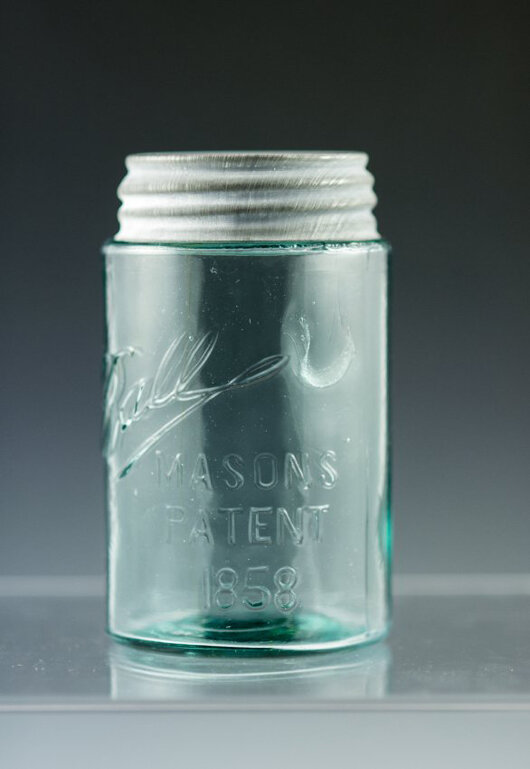
John Landis Mason invented the Mason Jar on November 30, 1858. In 1884, Ball Corporation began manufacturing glass home-canning jars, the product that established Ball as a household name and licensed Mason’s design.
There are few everyday objects more iconic than the Ball Mason jar. Stand it up next to the most memorable product designs of all time (e.g., Swingline Staplers, Polaroid Camera, Converse Sneakers, Swiss Army Knives, Levis Jeans, the Glass Coca-Cola Bottle, etc.), and it can hang with the best of them.
Perhaps it’s the timeless logo, the inexplicably comfortable weight of the vessel, or the effortless balance between elegance and utility that has secured Ball’s success for the last century. Ironically, while the Ball Mason jar is one of the more iconic products of all time, few people know the history behind the ageless invention. Seeing as how “Mason jar” related searches have reached “breakout status” in Google Trends (meaning the search term has grown by more than 5000%), we thought we’d help you satiate your curiosity by giving you a pint-sized history of the Ball Mason jar.

The Purpose Behind The Jar
Today, food manufacturers, restaurateurs, and home canners understand the finer points of preserving food. But 160 years ago, people weren’t considering(nor truly conscious of) the potential dangers of expired food or inadequately sealed vegetables. Without a thorough understanding of food preservation, foodborne illnesses such as botulism, listeria, and e. Coli were significant threats.
While rudimentary canning, pickling, and curing practices helped extend the lifespan of people’s food, it wasn’t until John Landis Mason invented his airtight invention, the Mason jar, that the art of food preservation was perfected. Mason was only 26 when he filed his jar patent! However, the journey to creating the ultimate jar was no simple process.
The Pioneer of Preservation
Before the jar, Mason patented a “Chuck for Making Sheet Metal Screws” in March 1858 (US 19786A). The conical shape of this chuck allowed him to create a cap that sealed as it was tightened. However, the problem of food preservation went much deeper than a fitted lid. Mason needed a vessel, one with uniform threads that matched the cap.
Because it didn’t exist already, Mason did what he did best: he invented another product, this time a “Mold for Making Bottles.” This new development came with significant improvements to the neck of the bottle while still using the existing glass molds (US 22129A).


From here, his inventions naturally improved, and Mason ultimately filed the patent for the “Improvement In Screw-Neck Bottles,” on November 30, 1858. It was the first hermetically re-sealable glass jar (US 22186A). These improvements, coupled with a rubber washer, transformed the capabilities of the home canning industry and solidified Mason’s place in history.
Not one to rest on his laurels, Mason continued to improve upon his ideas and secured another patent on June 6, 1871, called the “Improvement in Screw-Caps and Rings for Fruit-Jars” (US 115754A). Though it was only a minor revision, Mason added a small bump on the side of his lid to aid in opening jars. Mason’s final noteworthy patents, “Fruit-Jars” and “Fruit-Jar Covers,” were both issued on April 1, 1873 (US 137461A, 137462A).
Ball Brothers: Preserving Mason’s Legacy
After 20 years, Mason’s designs became public knowledge, and manufacturers had free reign to use them. Because competitors produced most Mason jars after his patent expired in 1879, Mason never achieved wealth, and sadly, lived meagerly until his death in 1902.
While some manufacturers blatantly ripped off his timeless invention, others were honest in their production. Documented factories that actually licensed Mason’s designs in the late-1800s include Mason Mfg. Co., Consolidated Fruit Jar Co., and Standard Union Mfg., and of course, The Ball Corporation.
According to Ball’s timeline, “Five brothers founded Ball in 1880 with a $200 loan from their Uncle George.” Initially, the company made wood-jacketed tin cans for products such as paint, kerosene, and other chemicals. Four years later, the brothers began manufacturing glass home-canning jars, the product that established Ball as a household name.
Interestingly, Ball Corporation no longer manufactures Ball branded Mason jars, but has expanded and grown into a worldwide company that makes everything from metal containers to aerospace parts.
Dating a Ball Mason Jar

Ball Mason Jar Sizes

The Spirit of the Jar Lives On
Because of the Mason Jar’s simple charm, it’s easy to overlook the profound impact it has had on our culture. In many ways, it’s transcended its original purpose as a mere a means of food preservation. Whether they’re used for party cocktails or eco-friendly pack n’ go containers, it’s clear that Mason jars have made a lasting impression on our culture.
The famous jars were used by many a wife and mother to can and preserve food. My own mother canned everything from mint jelly to beans to peaches in syrup. As a very necessary tool in the kitchen, the canning jar helped many families make use of harvests well into winter and beyond. While some food preservation is still done in pottery crocks, glass jars largely replaced stoneware starting in the late 1800s.
This basic kitchen item brings up vivid memories for us of Mom canning in the kitchen. But did you know that they are collectible? Find out more about the history and collectibility of these common jars.
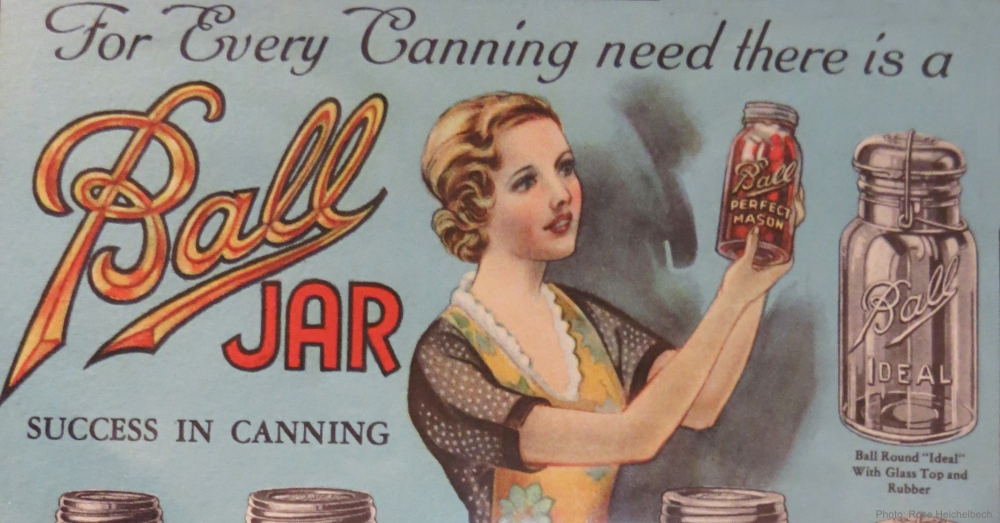
Jars were used by many a wife and mother to can and preserve food. They canned everything from mint jelly to beans to peaches in syrup. As a very necessary tool in the kitchen, the canning jar helped many families make use of harvests well into winter. While some food preservation is still done in pottery crocks, glass jars largely replaced stoneware starting in the late 1800s. The Mason jar was patented by Landis Mason in 1858 and Ball started producing these jars in 1885. Later, the process was “perfected” by Ball in 1913 when his factory was able to produce both the lid and jar to ensure a perfect fit each time.
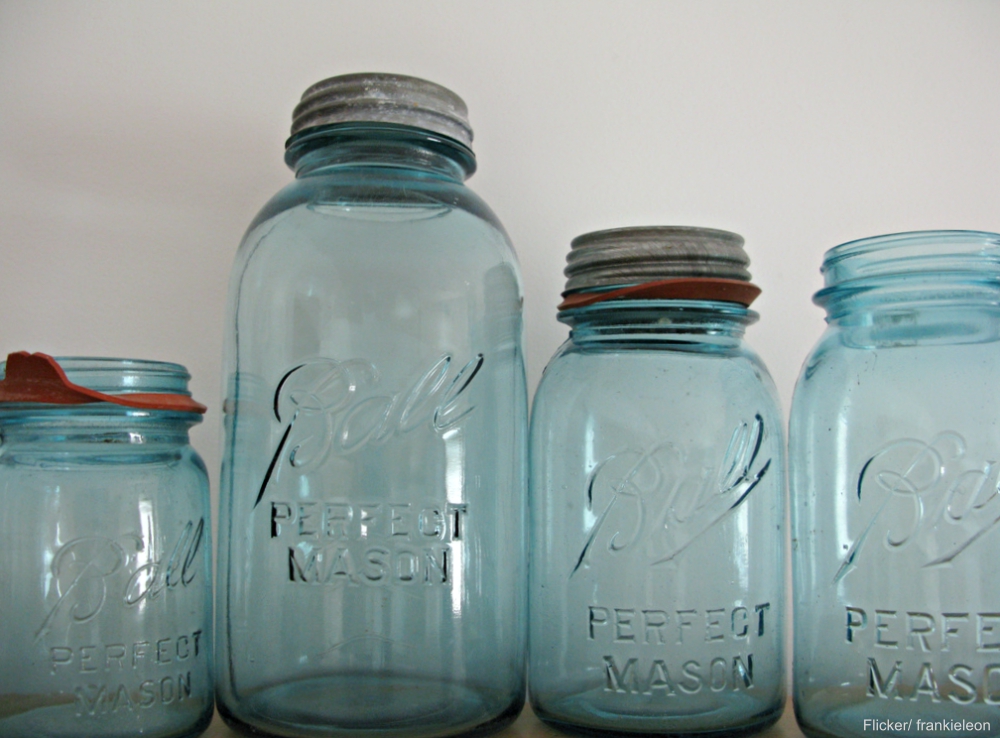
Ball jars were made in various colors, but the blue and clear colors are the most common. In 1976, Ball produced reproductions of the buffalo jars and created Bicentennial jars. In 2013 Ball made the Heritage Collection, which commemorates the 100 year anniversary of the historic 1913 breakthrough in their process. Since then, the company has produced several different modern colors, including purple and green. While colors produced in recent years may look similar, be aware that they have quite different values than the vintage colors. The smaller and more common vintage jars usually sell for less than $20. However, the vintage green jars or those with special wire carriers can sell in excess of $300.
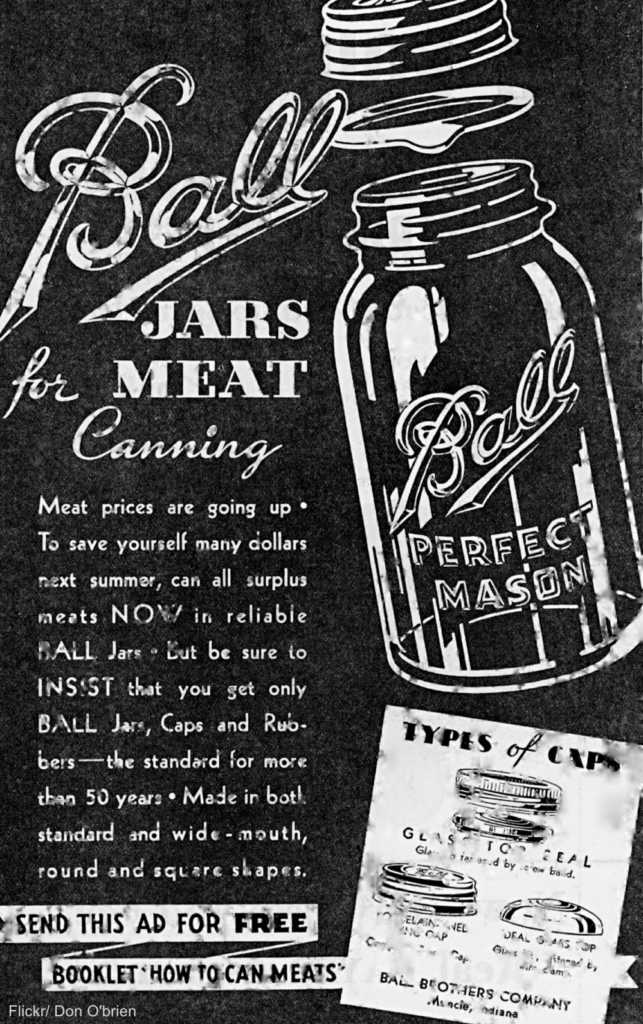
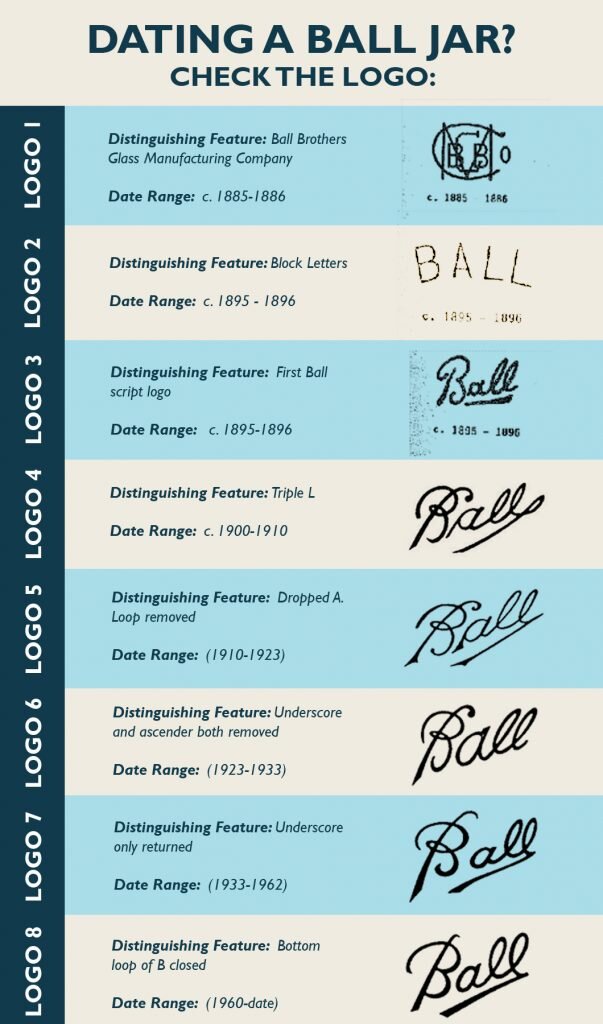
The logo is the best way to date the jars because the Ball logo changed throughout the years. Click here for a handy chart
that gives dates for the different logos used. Note that the numbers on
the bottom refer to mold numbers and not to model numbers. {chart is posted below}
Ball jars are an excellent area to collect in because they are abundant and can be found at many locations and for often-low price points. And, if you keep your eye out, you never know when you’ll find a much older or more rare Ball jar.
No, not at a movie on Saturday night. Not that kind of date. Instead, I mean how do you tell how old your Ball jar is? I’m the current contact for information about historical Ball jars on the Ball Corporation web site. One of the most common emails I receive comes with a description of a jar—e.g., Blue pint Perfect Mason with the number 5 on the bottom—and the question, “How old is my jar?”
Use The Logo To Find An Approximate Age
It would have been much easier if Ball had placed a date on each and every jar, but that didn’t happen. Luckily, there are some tips and tricks you can use to determine an approximate age for your jar. First check the logo, which changed fairly frequently until about 1962. The earliest logo was the intertwined BBGMC—Ball Brothers Glass Manufacturing Company—used on jars made in Buffalo, New York.
Rejoice if you find one of those; Buffalo jars are pretty rare. They were first made in Buffalo in 1884 and for several years after. But, you say, how can the date 1884 be correct, since you have a jar embossed with a patent date of 1858. That was the date when John Mason received his patent for the threaded screw-type closure, and it appears on many different brands of jars. It doesn’t indicate when the jars were made.
Check the logos below against the logo on your jar. Date ranges are estimates.
Ignore the Mold Number
How about that big number on the bottom of many jars? Does that help date the jar? Again, the answer is unfortunately, no. These are called mold numbers. They identify the position that the mold in which the jar was made held on the glassmaking machine. Most machines would have from eight to ten molds, all making the same type of jar. The quality control people used the number on the bottom of the jar to identify which mold was producing bad jars. The number has nothing to do with when the jar was made.
Two Online Resources
Now you know that you can determine an approximate age from the logo and that the big number on the bottom won’t help—even a “13,” but that’s a story for another day. To get a little more help in determining the age of your jar, visit the Minnetrista Heritage Collection {sadly this link doesn't work anymore} and do a keyword search on “Ball jar.” Match your jar to one of those listed and check the dates. You can also go to the Midwest Antique Fruit Jar and Bottle Club website, click on “When was my Ball jar made?” and follow the instructions.
Join the Club
While you’re there, check out the entire Midwest Antique Fruit Jar and Bottle Club web site. You’ll find a plethora of jar information. If you’re interested and close by, attend one of the club’s meetings, which meets regularly at Minnetrista. The schedule is on the club’s web site. You’ll meet enthusiastic and knowledgeable jar collectors, including club president Dick Cole. Dick is a retired Curator of Business and Industrial History at Minnetrista. He taught me everything I know about Ball jars, but not everything he knows.
What is the oldest Ball jar you own?

Minnetrista Director of Collections