Showing posts with label Zaria Gorvett. Show all posts

Wednesday, November 29, 2023

guest blogger, on Tyrian purple: The lost ancient pigment that was more valuable than gold

purple

My favorite color is purple, always has been.  I have never understood why, it isn't because it is the color of royalty, but then it is the color of the first light and last light of day.


bbc.com
Zaria Gorvett


By Zaria GorvettFeatures correspondent@ZariaGorvett
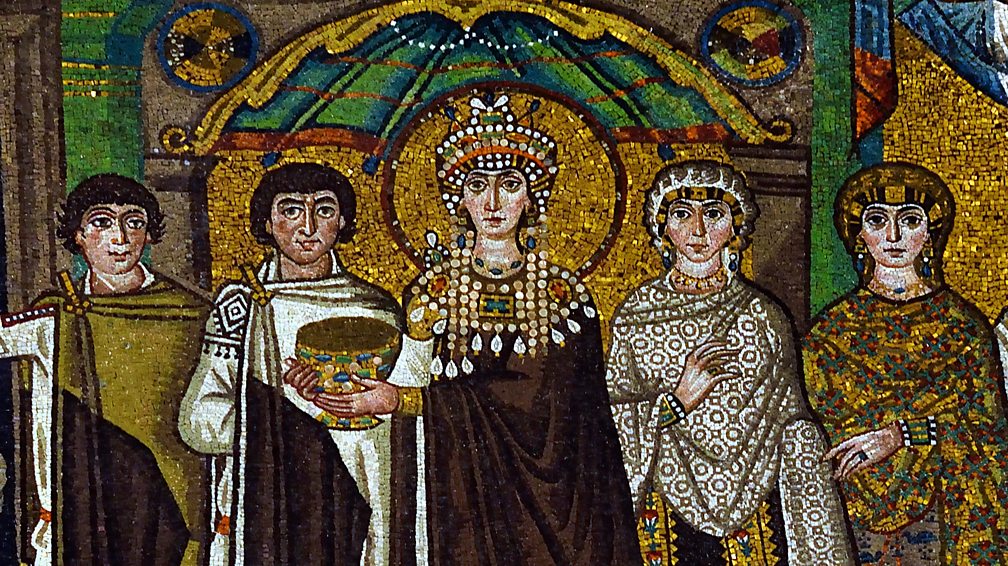
Alamy A mosaic of the Byzantine empress Theodora from 547AD (Credit: Alamy)

Alamy

A mosaic of the Byzantine empress Theodora from 547AD (Credit: Alamy)

For millennia, Tyrian purple was the most valuable colour on the planet. Then the recipe to make it was lost. By piecing together ancient clues, could one man bring it back?

At first, they just looked like stains. It was 2002 at the site of Qatna – a ruined palace at the edge of the Syrian desert, on the shores of a long-vanished lake. Over three millennia after it was abandoned, a team of archaeologists had been granted permission to investigate – and they were on the hunt for the royal tomb.

After navigating through large hallways and narrow corridors, down crumbling steps, they came across a deep shaft. On one side were two identical statues guarding a sealed door: they had found it. Inside was a hoard of ancient wonders – 2,000 objects, including jewellery and a large golden hand. But there were also some intriguing dark patches on the ground. They sent a sample for testing – eventually separating out a vivid purple layer from the dust and muck.

The researchers had uncovered one of the most legendary commodities in the ancient world. This precious product forged empires, felled kings, and cemented the power of generations of global rulers. The Egyptian Queen Cleopatra was so obsessed with it, she even used it for the sails of her boat, while some Roman emperors decreed that anyone caught wearing it – other than them – would be sentenced to death.  

That invention was Tyrian purple, otherwise known as shellfish purple. But though this noble pigment was the most expensive product in antiquity – worth more than three times its weight in gold, according to a Roman edict issued in 301 AD – no one living today knows how to make it. By the 15th Century, the elaborate recipes to extract and process the dye had been lost.

But why did this alluring colour disappear? And can it be resurrected?

In a small garden hut in north-eastern Tunisia, just a short distance from what was once the Phoenician city of Carthage, one man has spent most of the last 16 years smashing up sea snails – attempting to coax their entrails into something resembling Tyrian purple.
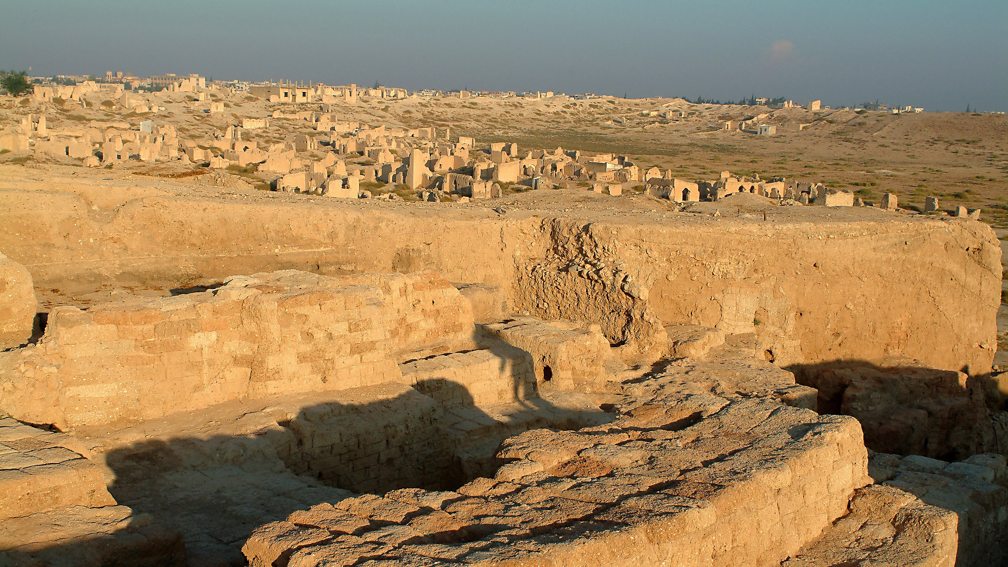
Alamy After more than three thousand years of mingling with sediment, the Tyrian purple found in Qatna’s royal tomb was still intensely colourful (Credit: Alamy)

Alamy

After more than three thousand years of mingling with sediment, the Tyrian purple found in Qatna’s royal tomb was still intensely colourful (Credit: Alamy)

A fishy empire

Tyrian purple was paraded by the most privileged in society for millennia – a symbol of strength, sovereignty and money. Ancient authors are particular about the precise hue that was worthy of the name: a deep reddish-purple, like that of coagulated blood, tinged with black. Pliny the Elder described it as having a "shining appearance when held up to the light".  

With its uniquely intense colour and resistance to fading, Tyrian purple was adored by ancient civilisations across Southern Europe, North Africa, and Western Asia. It was so central to the success of the Phoenicians – it was named after their city-state Tyre, and they became known as the "purple people". The shade could be found on everything from cloaks to sails, paintings, furniture, plaster, wall paintings, jewellery and even burial shrouds.

In 40 AD, the king of Mauretania was killed in a surprise assassination in Rome, ordered by the emperor. Despite being a friend to the Romans, the unfortunate royal had caused grave offence when he strode into an amphitheatre to watch a gladiatorial match… wearing a purple robe. The jealous, insatiable lust that the colour ignited was sometimes compared to a kind of madness.  

A slimy mystery

Oddly, the most celebrated pigment the world has known did not start life as a beautiful ultramarine gemstone, like its contemporary lapis lazuli – or a vibrant tangle of coral-pink roots, like the red dye madder. Instead, it began as a clear fluid produced by sea snails in the Murex family. More specifically, it was mucous. 
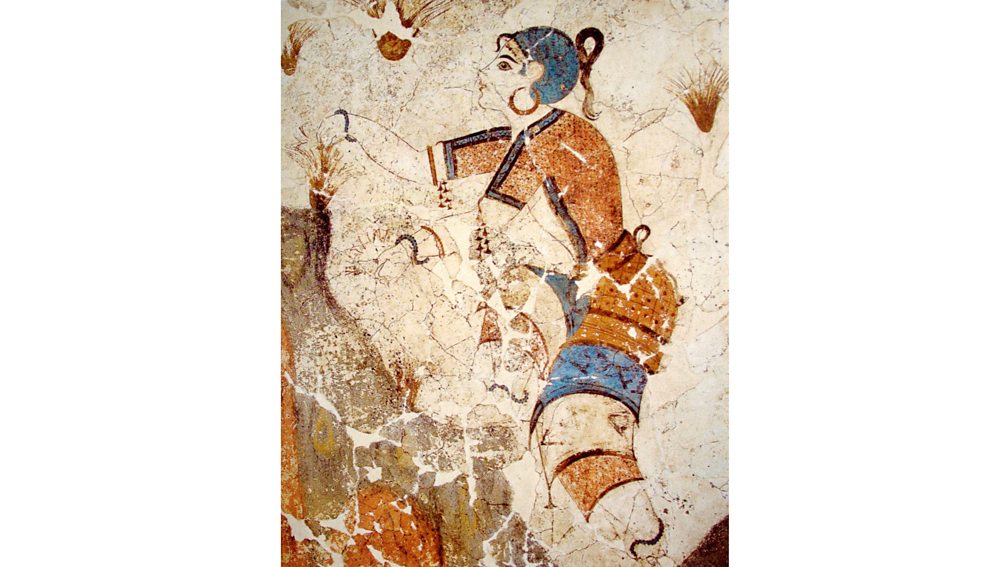
Alamy Tyrian purple has been found in paintings dating back to the Bronze Age (Credit: Alamy)

Alamy

Tyrian purple has been found in paintings dating back to the Bronze Age (Credit: Alamy)

Tyrian purple could be produced from the secretions of three species of sea snail, each of which made a different colour: Hexaplex trunculus (bluish purple), Bolinus brandaris (reddish purple), and Stramonita haemastoma (red).

Once snails had been collected, either by hand along rocky coastlines or with traps baited with other snails – Murex sea snails are predators – it was time to harvest the slime. In some places, the mucous gland was sliced it out using a specialised knife. One Roman author explained how the snail's gore would then ooze out of its wounds, "flowing out like tears", before being collected into mortars for grinding. Alternatively, smaller species could be crushed whole.

But this is the end of the certainty. Accounts of how colourless snail slime was transformed into the dye of legends are vague, contradictory and sometimes obviously mistaken – Aristotle said the mucous glands came from the throat of a "purple fish". To complicate matters further, the dyeing industry was highly secretive – each manufacturer had their own recipe, and these complex, multi-step formulas were closely guarded.

"The problem is that people did not write down the important tricks," says Maria Melo, a professor of conservation science at NOVA University of Lisbon, Portugal.

Mohammed Ghassen Nouira Murex snails may also have been the historic source of “tekhelet” – a sacred colour in the Jewish tradition mentioned in the Hebrew Bible (Credit: Mohammed Ghassen Nouira)

Mohammed Ghassen Nouira

Murex snails may also have been the historic source of “tekhelet” – a sacred colour in the Jewish tradition mentioned in the Hebrew Bible (Credit: Mohammed Ghassen Nouira)

A purple pong

In antiquity, Tyrian purple was not just renowned for its colour. Dyeworks were hotbeds of rotting fishy flesh with the added piquancy of urine – often used to help pigments stick. Whole neighbourhoods could become enveloped in this putrid aroma, and cities where it was manufactured were considered unpleasant places to live. The smell would permeate deep into the fibres of stained cloth, lingering long after it was purchased. Since the wealthy had exclusive access to this shade, it may have been advisable to stay downwind of them. (Read more from the BBC about the disgusting origins of the colour purple.)

The most detailed record comes from Pliny, who explained the process in the 1st Century AD. It went something like this: after isolating the mucous glands, they were salted and left to ferment for three days. Next came the cooking, which was done in tin or possibly lead pots on a "moderate" heat. This continued until the whole mixture had been boiled down to a fraction of its original volume. On the tenth day, the dye was tested by dipping in some fabric – if it emerged stained with the desired shade, it was ready. 

Given that each snail only contained the tiniest amount of mucous, it could take some 10,000 to make just a single gram of dye. Mounds of billions of discarded sea snail shells have been reported in areas where it was once manufactured. In fact, the production of Tyrian purple has been described as the first chemical industry – and this not only applies to the scale of the operations, but their exacting nature. 


"It is not really easy to obtain the colour," says Ioannis Karapanagiotis, a professor of conservation chemistry at Aristotle University of Thessaloniki, Greece. He explains that Tyrian purple is totally unlike other dyes, where the raw material – such as leaves – contains the pigment already. Instead, the sea snail mucous contains chemicals which can be turned into a dye, but only under the right conditions. "It is quite amazing," he says. And yet, many crucial details of the process are long forgotten.
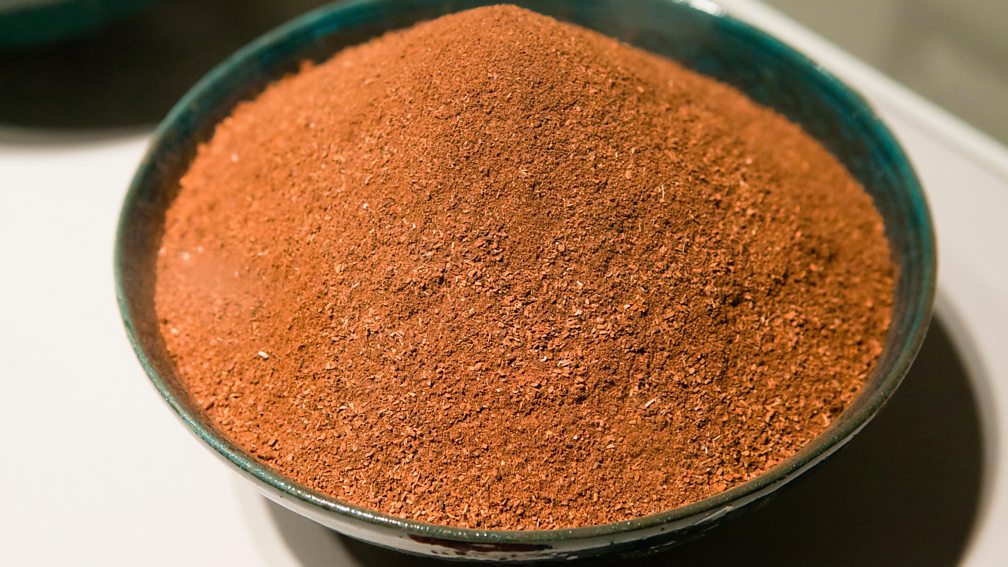
Alamy In ancient and medieval times, Tyrian purple was so valuable, it was often faked – usually with a combination of blue dye from indigo plants and red madder (Credit: Alamy)

Alamy

In ancient and medieval times, Tyrian purple was so valuable, it was often faked – usually with a combination of blue dye from indigo plants and red madder (Credit: Alamy)

An abrupt decline

In the early hours of 29 May 1453, the Byzantine city of Constantinople was captured by the Ottomans. This was the end of the Eastern Roman Empire – and it took Tyrian purple with it.

At the time, the city's dyeworks were at the centre of the industry. The colour had become deeply bound to Catholicism – worn by cardinals and used to dye the pages of religious manuscripts. But it had already been suffering, after a succession of excessive taxes. Now the church had lost control of the pigment's production altogether. So, the pope soon decided that red would become the new symbol of Christian power. This could be made easily and cheaply by crushing scale insects.

However, there may also have been another factor in the demise of Tyrian purple. In 2003, scientists stumbled upon a pile of sea snail shells at the site of the ancient port of Andriake in southern Turkey. In all, they estimated that this garbage heap, dating to the 6th Century AD, contained around 300 cubic metres (10,594 cubic ft) of their remains – corresponding to up to 60 million individuals.

Intriguingly, though the bottom of the pile – where the snails were discarded first – contained some plump, older specimens, those discarded more recently were significantly smaller and younger. One explanation is that the sea snails had been overexploited and eventually, there just weren't any mature snails left. This may have led to the extinction of dye production in the area, the researchers suggest.

But just a few years after this discovery, another would raise hopes of reviving this ancient colour.
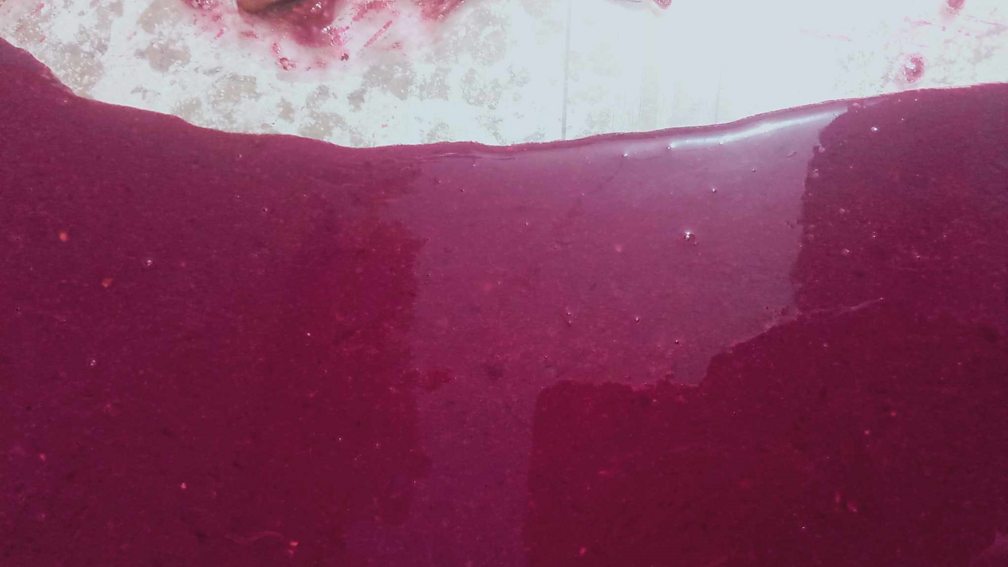
Mohammed Ghassen Nouira In Mexico and Central America, indigenous people have a very different method for dyeing with Murex – they rub live snails onto fabric directly (Credit: Mohammed Ghassen Nouira)

Mohammed Ghassen Nouira

In Mexico and Central America, indigenous people have a very different method for dyeing with Murex – they rub live snails onto fabric directly (Credit: Mohammed Ghassen Nouira)

A determined revival

One day in September 2007, Mohammed Ghassen Nouira was taking his usual lunchtime walk on a beach on the outskirts of the city of Tunis, Tunisia. "There had been a horrible storm the previous night, so there were a lot of dead creatures on the sand, like jellyfish, seaweeds, small crabs, molluscs," he says. Then he noticed a smear of colour – an intensely reddish-purple liquid was oozing out of a cracked sea snail.

Nouira, who works as a consulting manager, was immediately reminded of a story he had learned at school – the legend of Tyrian purple. He raced to the local harbour, where he found many more snails, exactly like the one on the beach. Their little spiral bodies are covered in spikes, so they often become trapped in fishermen's nets. "They hate them," he says. One man was plucking them out of his net and putting them in an old tomato can – which Nouira later took back to his apartment.

To begin with, Nouira's experiment was extremely disappointing. That night, he cracked the snails open and looked for the vivid purple entrails he had seen on the beach. But there was nothing there except pale flesh. He put it all in a bag to throw away, and went to bed. The next day, the bag's contents had undergone a transformation. "At that time, I had no clue that the purple was initially transparent – it's like water," he says.
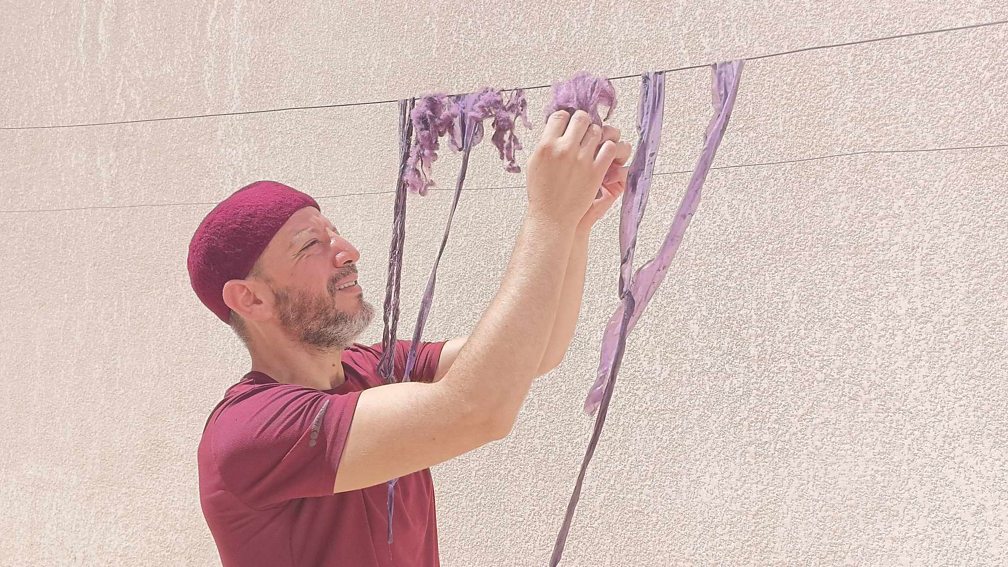
Mohammed Ghassen Nouira For dyes to stick to fabric, their molecules need to be converted to a water-soluble form. It’s not clear how this was achieved in antiquity (Credit: Mohammed Ghassen Nouira)

Mohammed Ghassen Nouira

For dyes to stick to fabric, their molecules need to be converted to a water-soluble form. It’s not clear how this was achieved in antiquity (Credit: Mohammed Ghassen Nouira)

A modern application

Today scientists have been investigating a possible new use for Tyrian purple – or at least, one of the most important molecules involved. In its pure form, 6,6'-dibromoindigo is a deep purple powder, and it just so happens that it makes an excellent semiconductor – the basis of modern electronics. As an organic material it's biodegradable and less alien to the human body than silicon, so as well as making electronics more ecofriendly, it could potentially be used in wearable technologies. The best part? It can be made in a laboratory – with no sea snails involved. 

Scientists now know that to jolt the chemicals in Murex snails out of their colourless state, they need to be exposed to visible light. Initially their secretions will turn yellow, then green, turquoise, blue and eventually a shade of purple, depending on the snail species. "If you do this process on a sunny day, it takes something like less than five minutes to have this transformation," says Karapanagiotis.

But this isn't instant Tyrian purple. The shade is actually made up of many different pigment molecules, all working together. Melo explains that there's indigo, which is blue, "brominated" indigo, which is purple, and indirubin, which is red. "Depending on the treatment of your extract, and on the dying, you can have very different colours," she says. Even once the desired colour has been achieved, there is still yet more processing to do to turn the pigments into a dye, such as converting them into forms that will stick to fabric.

For Nouira, this was the beginning of a 16-year obsession with uncovering the lost method for making Tyrian purple. Though others have investigated the secretions of sea snails before – including a scientist who processed 12,000 individuals into 1.4g of pure powdered pigment using industrial techniques – Nouira wanted to make it the old way, and rediscover the authentic shade that was venerated for millennia.

When he took those first sea snails in his apartment back in 2007, it was just a week after his honeymoon. "My wife was horrified by the by the smell; she almost kicked me out of the house… But I had to carry on," he says.
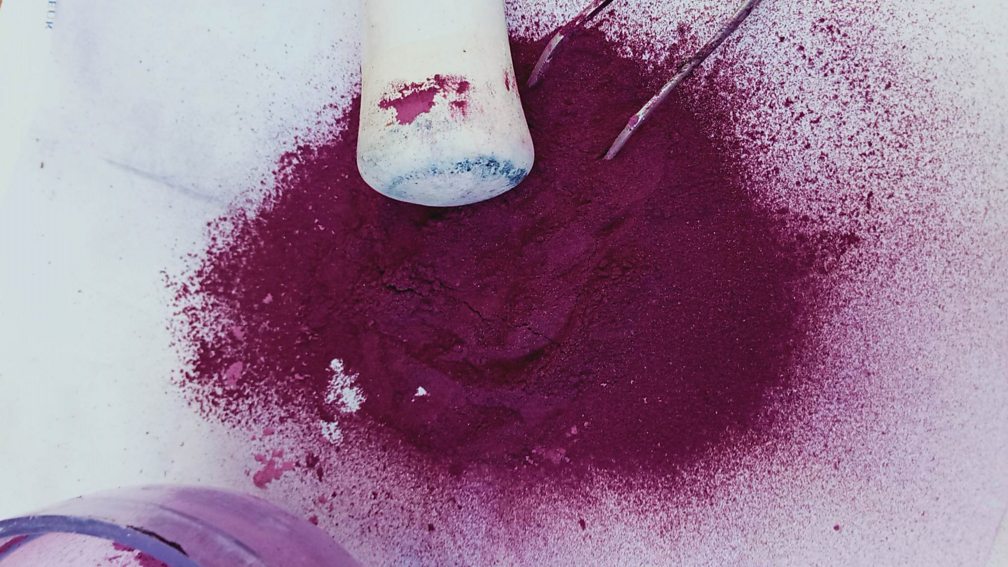
Mohammed Ghassen Nouira Ancient Roman authors compared Tyrian purple to the colour of clotted blood (Credit: Mohammed Ghassen Nouira)

Mohammed Ghassen Nouira

Ancient Roman authors compared Tyrian purple to the colour of clotted blood (Credit: Mohammed Ghassen Nouira)

It took years for Nouira to make his first powdered dye, and when he did, it was a pale indigo colour, nothing like Tyrian purple and extremely dusty. Through years of trial and error, Nouira gradually discovered tricks that he suspects may have been used in antiquity – blending secretions from all three sea snail species mentioned in Pliny's account, adjusting the acidity of the mixture, alternating exposure to sunlight with darkness during preparation, and cooking his mixtures for different lengths of time.

For references, Nouira mostly used Byzantine mosaics depicting Justinian I and his wife Theodora – though he also later compared his results with surviving fragments of fabric. Eventually he ended up with pure pigments and dyes that he thinks are uncannily close to true Tyrian purple – and live up to the ancient hype. "It [the colour] is very alive, very dynamic," he says. "Depending on the light, it shifts and shimmers… it keeps changing and playing tricks on your eyes."
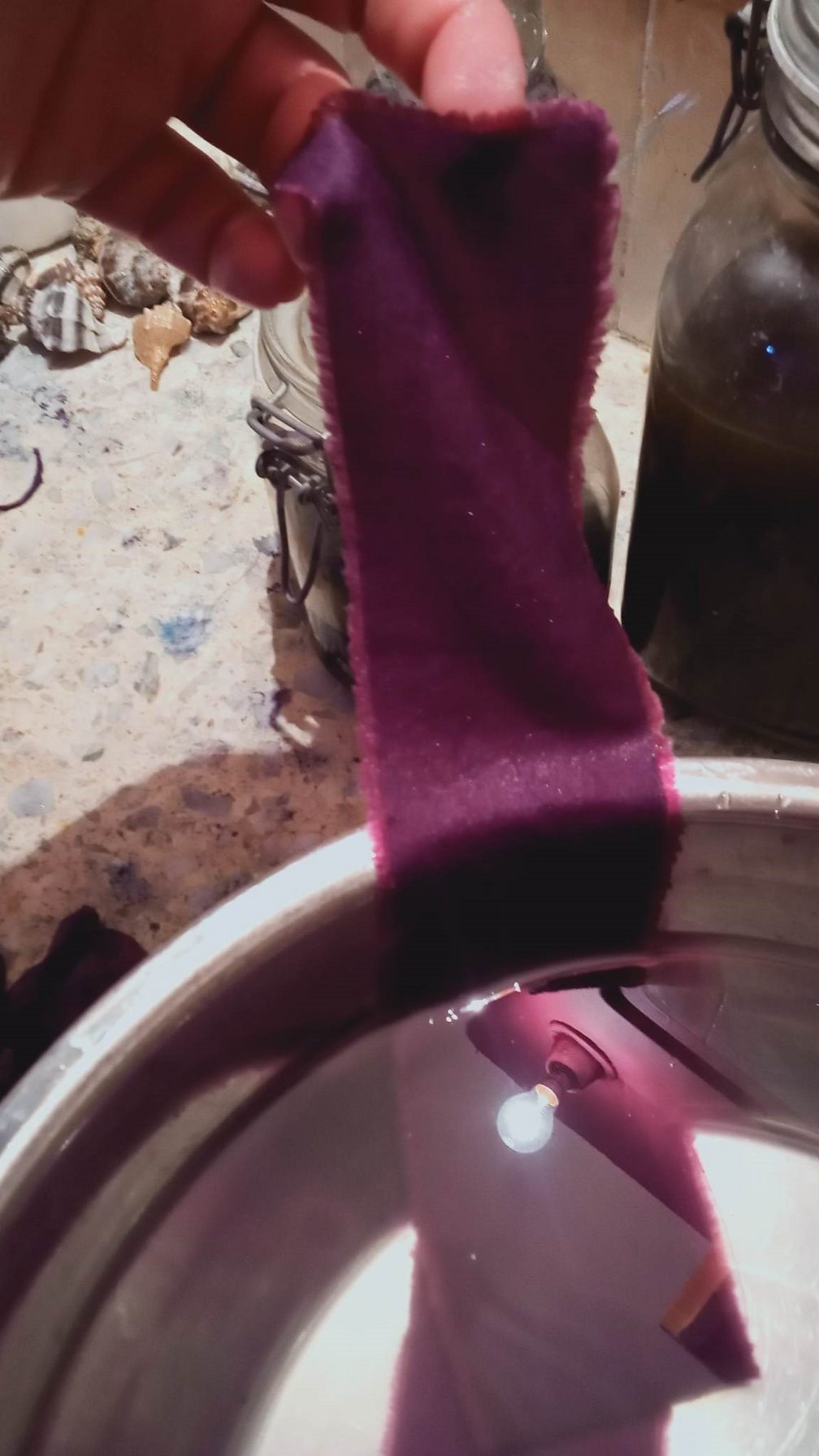
Mohammed Ghassen Nouira It’s not known why Murex snails produce the chemical precursors to Tyrian purple, but one idea is that they are used to paralyse prey (Credit: Mohammed Ghassen Nouira)

Mohammed Ghassen Nouira

It’s not known why Murex snails produce the chemical precursors to Tyrian purple, but one idea is that they are used to paralyse prey (Credit: Mohammed Ghassen Nouira)

After decades of pungent experiments in his shed, Nouira has been invited to display his pigments and dyed products at exhibitions all over the world, including the British Museum in London and the Museum of Fine Arts Boston. He has also become something of a culinary expert on sea snail recipes; he recommends spicy Tunisian Murex pasta, or fried Murex. "It's crunchy, it's delicious, it's incredible," he says.

But Tyrian purple is again under threat. Today the challenge is not invasion, or secrecy surrounding how it's made – though like his ancient counterparts, Nouira is furtive about the exact details of his methods – but extinction. Murex sea snails are under threat from a barrage of human influences, including pollution and climate change. Stramonita haemastoma, which lends the colour a reddish tint, has already vanished from the eastern Mediterranean. So, whether or not Tyrian purple has finally been revived, one thing is certain: it could easily be lost all over again.

--


Wednesday, April 13, 2022

Are 2 sleeps better than~1??, guest blogger

 v

bbc.com

The forgotten medieval habit of 'two sleeps'

Zaria Gorvett

The forgotten medieval habit of 'two sleeps'

(Image credit: Alamy)

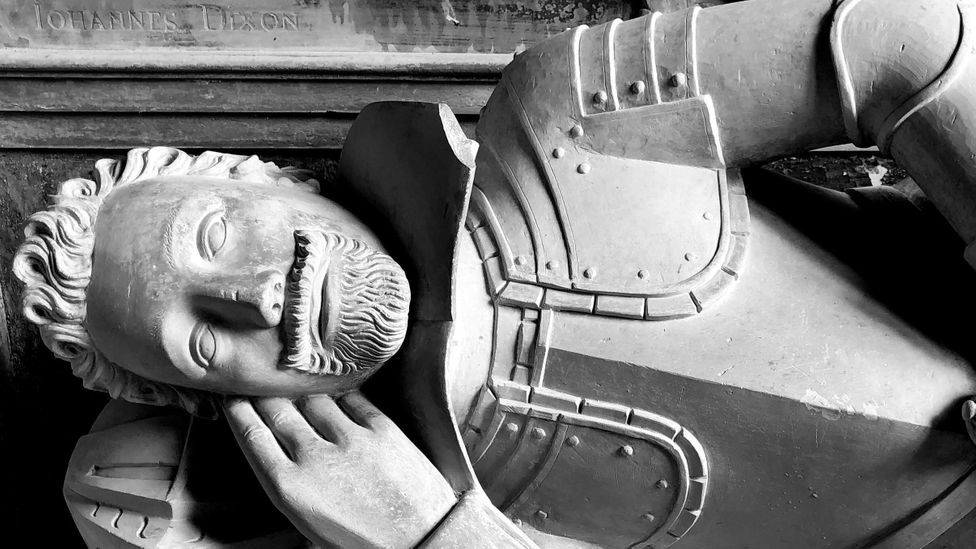
A memorial tombstone of a sleeping knight (Credit: Alamy)

For millennia, people slept in two shifts – once in the evening, and once in the morning. But why? And how did the habit disappear?

I

It was around 23:00 on 13 April 1699, in a small village in the north of England. Nine-year-old Jane Rowth blinked her eyes open and squinted out into the moody evening shadows. She and her mother had just awoken from a short sleep.

Mrs Rowth got up and went over to the fireside of their modest home, where she began smoking a pipe. Just then, two men appeared by the window. They called out and instructed her to get ready to go with them.

As Jane later explained to a courtroom, her mother had evidently been expecting the visitors. She went with them freely – but first whispered to her daughter to "lye still, and shee would come againe in the morning". Perhaps Mrs Rowth had some nocturnal task to complete. Or maybe she was in trouble, and knew that leaving the house was a risk. 

Either way, Jane's mother didn't get to keep her promise – she never returned home. That night, Mrs Rowth was brutally murdered, and her body was discovered in the following days. The crime was never solved.

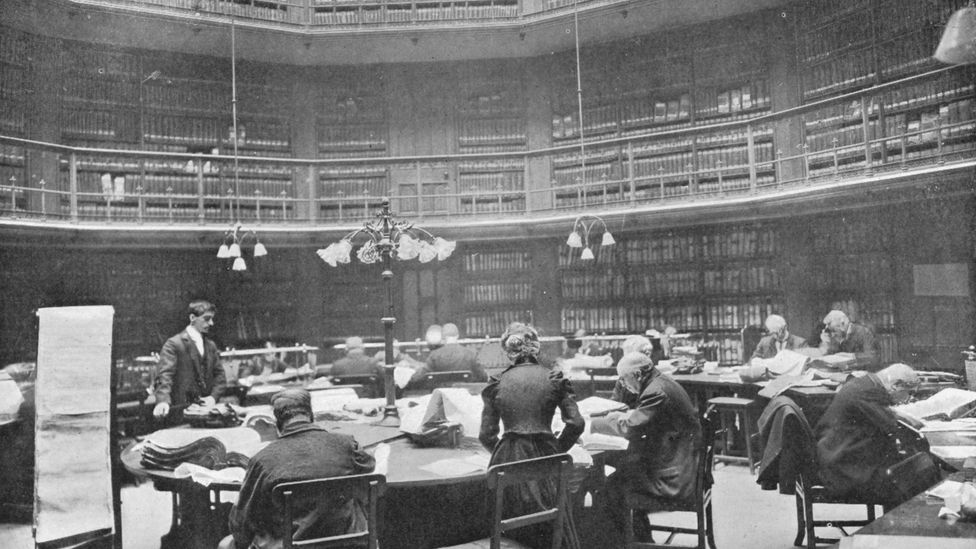
Nearly 300 years later, in the early 1990s, the historian Roger Ekirch walked through the arched entranceway to the Public Record Office in London – an imposing gothic building that housed the UK's National Archives from 1838 until 2003. There, among the endless rows of ancient vellum papers and manuscripts, he found Jane's testimony. And something about it struck him as odd. 

Originally, Ekirch had been researching a book about the history of night-time, and at the time he had been looking through records that spanned the era between the early Middle Ages and the Industrial Revolution. He was dreading writing the chapter on sleep, thinking that it was not only a universal necessity – but a biological constant. He was sceptical that he'd find anything new.  

So far, he had found court depositions particularly illuminating. "They're a wonderful source for social historians," says Ekirch, a professor at Virginia Tech, US. "They comment upon activity that's oftentimes unrelated to the crime itself."

But as he read through Jane's criminal deposition, two words seemed to carry an echo of a particularly tantalising detail of life in the 17th Century, which he had never encountered before – "first sleep".

"I can cite the original document almost verbatim," says Ekirch, whose exhilaration at his discovery is palpable even decades later.

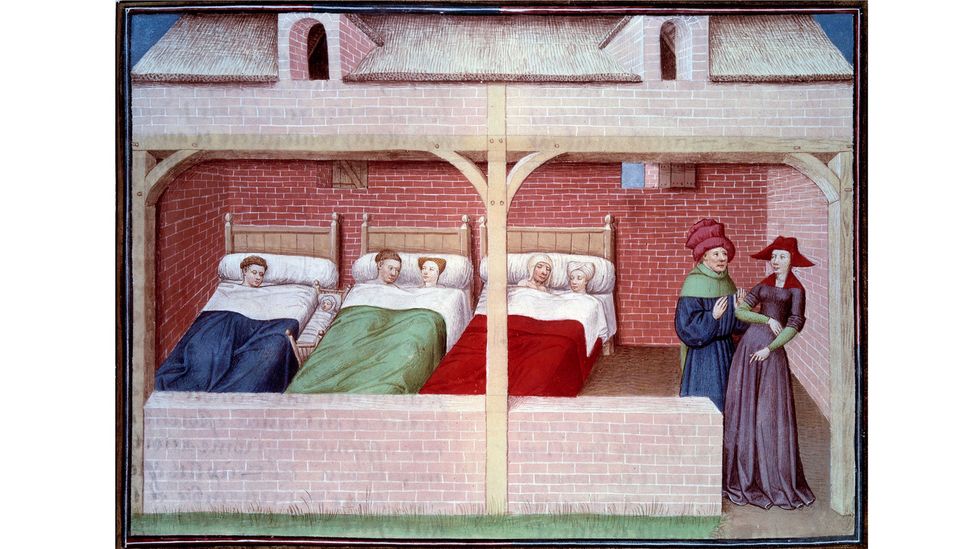
In the Middle Ages, communal sleeping was entirely normal – travellers who had just met would share the same bed, as would masters and their servants (Credit: British Library)

In the Middle Ages, communal sleeping was entirely normal – travellers who had just met would share the same bed, as would masters and their servants (Credit: British Library)

In her testimony, Jane describes how just before the men arrived at their home, she and her mother had arisen from their first sleep of the evening. There was no further explanation – the interrupted sleep was just stated matter-of-factly, as if it were entirely unremarkable. "She referred to it as though it was utterly normal," says Ekirch.

A first sleep implies a second sleep – a night divided into two halves. Was this just a familial quirk, or something more?

An omnipresence

Over the coming months, Ekirch scoured the archives and found many more references to this mysterious phenomenon of double sleeping, or "biphasic sleep" as he later called it.

Some were fairly banal, such as the mention by the weaver Jon Cokburne, who simply dropped it into his testimony incidentally. But others were darker, such as that of Luke Atkinson of the East Riding of Yorkshire. He managed to squeeze in an early morning murder between his sleeps one night – and according to his wife, often used the time to frequent other people's houses for sinister deeds.

When Ekirch expanded his search to include online databases of other written records, it soon became clear the phenomenon was more widespread and normalised than he had ever imagined.

For a start, first sleeps are mentioned in one of the most famous works of medieval literature, Geoffrey Chaucer's The Canterbury Tales (written between 1387 and 1400), which is presented as a storytelling contest between a group of pilgrims. They're also included in the poet William Baldwin's Beware the Cat (1561) – a satirical book considered by some to be the first ever novel, which centres around a man who learns to understand the language of a group of terrifying supernatural cats, one of whom, Mouse-slayer, is on trial for promiscuity.

But that's just the tip of the iceberg. Ekirch found casual references to the system of twice-sleeping in every conceivable form, with hundreds in letters, diaries, medical textbooks, philosophical writings, newspaper articles and plays.

The practice even made it into ballads, such as "Old Robin of Portingale. "…And at the wakening of your first sleepe, You shall have a hot drink made, And at the wakening of your next sleepe, Your sorrows will have a slake…"

Biphasic sleep was not unique to England, either – it was widely practised throughout the preindustrial world. In France, the initial sleep was the "premier somme"; in Italy, it was "primo sonno". In fact, Eckirch found evidence of the habit in locations as distant as Africa, South and Southeast Asia, Australia, South America and the Middle East.

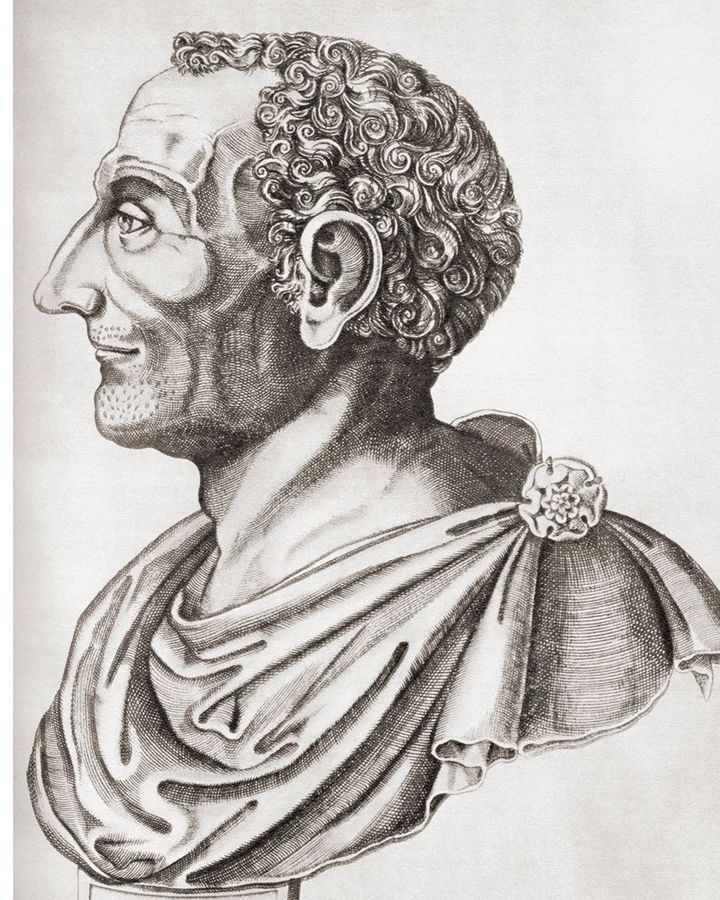
Like many Romans, the historian Livy may have been a practitioner of biphasic sleep – he alludes to the method in his magnum opus, The History of Rome (Credit: Alamy)

Like many Romans, the historian Livy may have been a practitioner of biphasic sleep – he alludes to the method in his magnum opus, The History of Rome (Credit: Alamy)

One colonial account from Rio de Janeiro, Brazil in 1555 described how the Tupinambá people would eat dinner after their first sleep, while another – from 19th Century Muscat, Oman – explained that the local people would retire for their first sleep before 22:00.

And far from being a peculiarity of the Middle Ages, Ekirch began to suspect that the method had been the dominant way of sleeping for millennia – an ancient default that we inherited from our prehistoric ancestors. The first record Ekirch found was from the 8th Century BC, in the 12,109-line Greek epic The Odyssey, while the last hints of its existence dated to the early 20th Century, before it somehow slipped into oblivion.

How did it work? Why did people do it? And how could something that was once so completely normal, have been forgotten so completely?

A spare moment

In the 17th Century, a night of sleep went something like this.

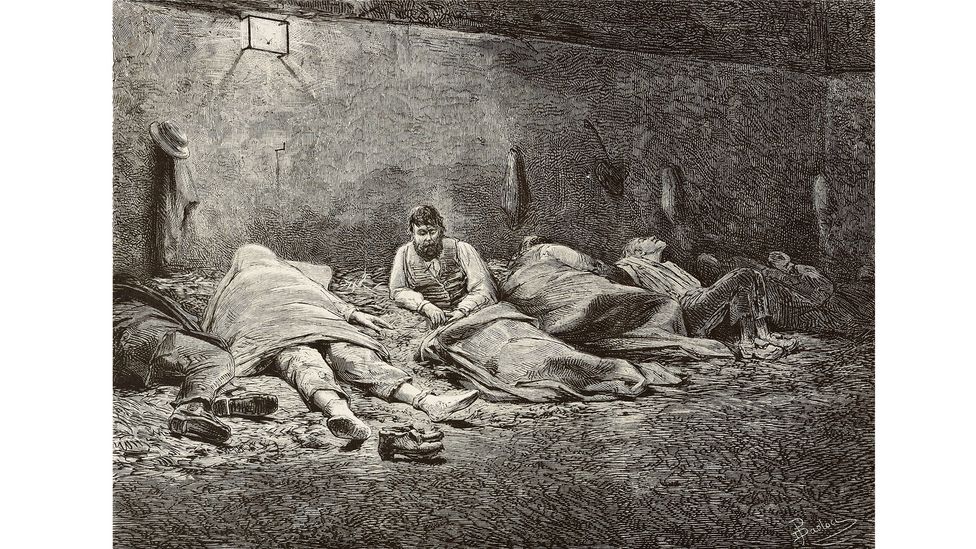
From as early as 21:00 to 23:00, those fortunate enough to afford them would begin flopping onto mattresses stuffed with straw or rags – alternatively it might have contained feathers, if they were wealthy – ready to sleep for a couple of hours. (At the bottom of the social ladder, people would have to make do with nestling down on a scattering of heather or, worse, a bare earth floor – possibly even without a blanket.)

At the time, most people slept communally, and often found themselves snuggled up with a cosy assortment of bedbugs, fleas, lice, family members, friends, servants and – if they were travelling – total strangers.

To minimise any awkwardness, sleep involved a number of strict social conventions, such as avoiding physical contact or too much fidgeting, and there were designated sleeping positions. For example, female children would typically lie at one side of the bed, with the oldest nearest the wall, followed by the mother and father, then male children – again arranged by age – then non-family members.

A couple of hours later, people would begin rousing from this initial slumber. The night-time wakefulness usually lasted from around 11:00 to about 01:00, depending on what time they went to bed. It was not generally caused by noise or other disturbances in the night – and neither was it initiated by any kind of alarm (these were only invented in 1787, by an American man who – somewhat ironically – needed to wake up on time to sell clocks). Instead, the waking happened entirely naturally, just as it does in the morning.

The period of wakefulness that followed was known as "the watch" – and it was a surprisingly useful window in which to get things done. "[The records] describe how people did just about anything and everything after they awakened from their first sleep," says Ekirch.

Communal sleeping meant that people usually had someone to chat with when they woke up for "the watch" (Credit: Getty Images)

Communal sleeping meant that people usually had someone to chat with when they woke up for "the watch" (Credit: Getty Images)

Under the weak glow of the Moon, stars, and oil lamps or "rush lights" – a kind of candle for ordinary households, made from the waxed stems of rushes – people would tend to ordinary tasks, such as adding wood to the fire, taking remedies, or going to urinate (often into the fire itself).

For peasants, waking up meant getting back down to more serious work – whether this involved venturing out to check on farm animals or carrying out household chores, such as patching cloth, combing wool or peeling the rushes to be burned. One servant Ekirch came across even brewed a batch of beer for her Westmorland employer one night, between midnight and 02:00. Naturally, criminals took the opportunity to skulk around and make trouble – like the murderer in Yorkshire.

But the watch was also a time for religion.  

For Christians, there were elaborate prayers to be completed, with specific ones prescribed for this exact parcel of time. One father called it the most "profitable" hour, when – after digesting your dinner and casting off the labours of the world – "no one will look for you except for God”.

Those of a philosophical disposition, meanwhile, might use the watch as a peaceful moment to ruminate on life and ponder new ideas. In the late 18th Century, a London tradesman even invented a special device for remembering all your most searing nightly insights – a "nocturnal remembrancer", which consisted of an enclosed pad of parchment with a horizontal opening that could be used as a writing guide.  

But most of all, the watch was useful for socialising – and for sex.

As Ekirch explains in his book, At Day's Close: A History of Nighttime, people would often just stay in bed and chat. And during those strange twilight hours, bedfellows could share a level of informality and casual conversation that was hard to achieve during the day.

For husbands and wives who managed to navigate the logistics of sharing a bed with others, it was also a convenient interval for physical intimacy – if they'd had a long day of manual labour, the first sleep took the edge off their exhaustion and the period afterwards was thought to be an excellent time to conceive copious numbers of children.

Once people had been awake for a couple of hours, they'd usually head back to bed. This next step was considered a "morning" sleep and might last until dawn, or later. Just as today, when people finally woke up for good depended on what time they went to bed.

The Public Record Office was home to thousands of criminal depositions from the medieval era, which are now kept at The National Archives in Kew (Credit: Getty Images)

The Public Record Office was home to thousands of criminal depositions from the medieval era, which are now kept at The National Archives in Kew (Credit: Getty Images)

An ancient adaptation

According to Ekirch, there are references to the system of sleeping twice peppered throughout the classical era, suggesting that it was already common then. It's casually dropped into works by such illustrious figures as the Greek biographer Plutarch (from the First Century AD), the Greek traveller Pausanias (from the Second Century AD), the Roman historian Livy and the Roman poet Virgil.

Later, the practise was embraced by Christians, who immediately saw the watch's potential as an opportunity for the recital of psalms and confessions. In the Sixth Century AD, Saint Benedict required that monks rise at midnight for these activities, and the idea eventually spread throughout Europe – gradually filtering through to the masses.        

But humans aren't the only animals to discover the benefits of dividing up sleep – it's widespread in the natural world, with many species resting in two or even several separate stretches. This helps them to remain active at the most beneficial times of day, such as when they're most likely to find food while avoiding ending up as a snack themselves. 

One example is the ring-tailed lemur. These iconic Madagascan primates, with their spooky red eyes and upright black-and-white tails, have remarkably similar sleeping patterns to preindustrial humans – they're "cathemeral", meaning they're up at night and during the day.

"There are broad swaths of variability among primates, in terms of how they distribute their activity throughout the 24-hour period," says David Samson, director of the sleep and human evolution laboratory at the University of Toronto Mississauga, Canada. And if double-sleeping is natural for some lemurs, he wondered: might it be the way we evolved to sleep too? 

Ekirch had long been harbouring the same hunch. But for decades, there was nothing concrete to prove this – or to illuminate why it might have vanished.

Then back 1995, Ekirch was doing some online reading late one night when he found an article in the New York Times about a sleep experiment from a few years before.

The research was conducted by Thomas Wehr, a sleep scientist from the National Institute of Mental Health, and involved 15 men. After an initial week of observing their normal sleeping patterns, they were deprived of artificial illumination at night to shorten their hours of "daylight" – whether naturally or electrically generated – from the usual 16 hours to just 10. The rest of the time, they were confined to a bedroom with no lights or windows, and fully enveloped in its velvety blackness. They weren't allowed to play music or exercise – and were nudged towards resting and sleeping instead.

Ekirch wonders if today people might remember fewer dreams than our ancestors did, because it's less common to wake up in the middle of the night (Credit: Alamy)

Ekirch wonders if today people might remember fewer dreams than our ancestors did, because it's less common to wake up in the middle of the night (Credit: Alamy)

At the start of the experiment, the men all had normal nocturnal habits – they slept in one continuous shift that lasted from the late evening until the morning. Then something incredible happened.

After four weeks of the 10-hour days, their sleeping patterns had been transformed – they no longer slept in one stretch, but in two halves roughly the same length. These were punctuated by a one-to-three-hour period in which they were awake. Measurements of the sleep hormone melatonin showed that their circadian rhythms had adjusted too, so their sleep was altered at a biological level.

Wehr had reinvented biphasic sleep. "It [reading about the experiment] was, apart from my wedding and the birth of my children, probably the most exciting moment in my life," says Ekirch. When he emailed Wehr to explain the extraordinary match between his own historical research, and the scientific study, "I think I can tell you that he was every bit as exhilarated as I was," he says.

For much of human history, those who couldn't afford a bed had to sleep on straw or other dried vegetation (Credit: Getty Images)

For much of human history, those who couldn't afford a bed had to sleep on straw or other dried vegetation (Credit: Getty Images)

More recently, Samson's own research has backed up these findings – with an exciting twist.

Back in 2015, together with collaborators from a number of other universities, Samson recruited local volunteers from the remote community of Manadena in northeastern Madagascar for a study. The location is a large village that backs on to a national park – and there is no infrastructure for electricity, so nights are almost as dark as they would have been for millennia.

The participants, who were mostly farmers, were asked to wear an "actimeter" – a sophisticated activity-sensing device that can be used to track sleep cycles – for 10 days, to track their sleep patterns.

"What we found was that [in those without artificial light], there was a period of activity right after midnight until about 01:00-01:30 in the morning," says Samson, "and then it would drop back to sleep and to inactivity until they woke up at 06:00, usually coinciding with the rising of the Sun."

As it turns out, biphasic sleep never vanished entirely – it lives on in pockets of the world today.

A new social pressure 

Collectively, this research has also given Ekirch the explanation he had been craving for why much of humanity abandoned the two-sleep system, starting from the early 19th Century. As with other recent shifts in our behaviour, such as a move towards depending on clock-time, the answer was the Industrial Revolution.

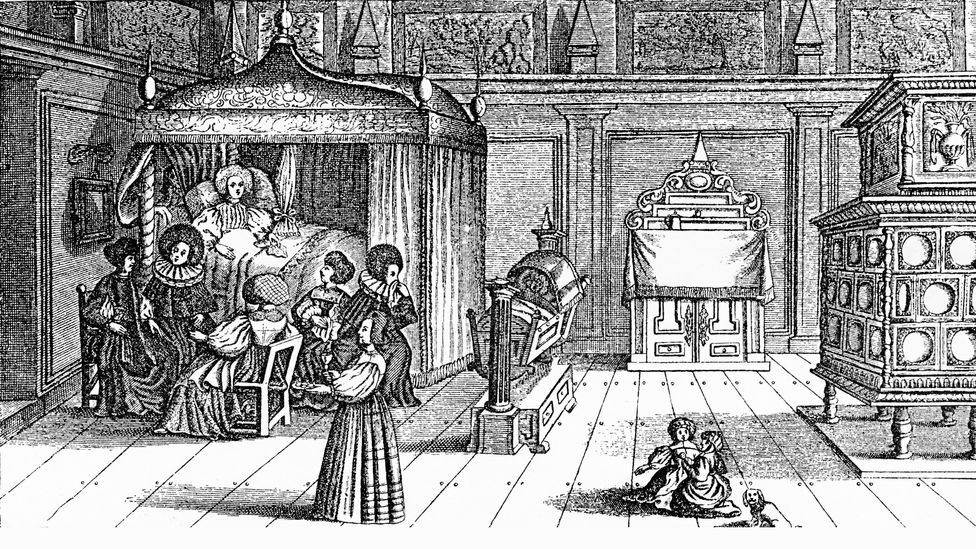
In the 17th Century, wealthy elites usually slept in four-poster wooden beds with curtains, to keep the occupant warmer and exclude the prying eyes of visitors (Credit: Alamy)

In the 17th Century, wealthy elites usually slept in four-poster wooden beds with curtains, to keep the occupant warmer and exclude the prying eyes of visitors (Credit: Alamy)

"Artificial illumination became more prevalent, and more powerful – first there was gas [lighting], which was introduced for the first time ever in London," says Ekirch, "and then, of course, electric lighting toward the end of the century. And in addition to altering people's circadian rhythms. artificial illumination also naturally allowed people to stay up later."

However, though people weren't going to bed at 21:00 anymore, they still had to wake up at the same time in the morning – so their rest was truncated. Ekirch believes that this made their sleep deeper, because it was compressed.

As well as altering the population's circadian rhythms, the artificial lighting lengthened the first sleep, and shortened the second. "And I was able to trace [this], almost decade by decade, over the course of the 19th Century," says Ekirch.

(Intriguingly, Samson's study in Madagascar involved a second part – in which half the participants were given artificial lights for a week, to see if they made any difference. And this case, the researchers found that it had no impact on their segmented sleep patterns. However, the researchers point out that a week may not be long enough for artificial lights to lead to major changes. So the mystery continues…)

Even if artificial lighting was not fully to blame, by the end of the 20th Century, the division between the two sleeps had completely disappeared – the Industrial Revolution hadn't just changed our technology, but our biology, too.

A new anxiety

One major side-effect of much of humanity's shift in sleeping habits has been a change in attitudes. For one thing, we quickly began shaming those who oversleep, and developed a preoccupation with the link between waking up early and being productive.

"But for me, the most gratifying aspect of all this," says Ekert, "relates to those who suffer from middle-of-the-night insomnia." He explains that our sleeping patterns are now so altered, any wakefulness in the middle of the night can lead us to panic. "I don't mean to make light of that – indeed, I suffer from sleep disorders myself, actually. And I take medication for it… " But when people learn that this may have been entirely normal for millennia, he finds that it lessens their anxiety somewhat.  

However, before Ekirch's research spawns a spin off of the Paleo diet, and people start throwing away their lamps – or worse, artificially splitting their sleep in two with alarm clocks – he's keen to stress that the abandonment of the two-sleep system does not mean the quality of our slumber today is worse.

Despite near-constant headlines about the prevalence of sleep problems, Ekirch has previously argued that, in some ways, the 21st Century is a golden age for sleep – a time when most of us no longer have to worry about being murdered in our beds, freezing to death, or flicking off lice, when we can slumber without pain, the threat of fire, or having strangers snuggled up next to us.

In short, single periods of slumber might not be "natural". And yet, neither are fancy ergonomic mattresses or modern hygiene. "More seriously, there's no going back because conditions have changed," says Ekirch. 

So, we may be missing out on confidential midnight chats in bed, psychedelic dreams, and night-time philosophical revelations – but at least we won't wake up covered in angry red bites.

--

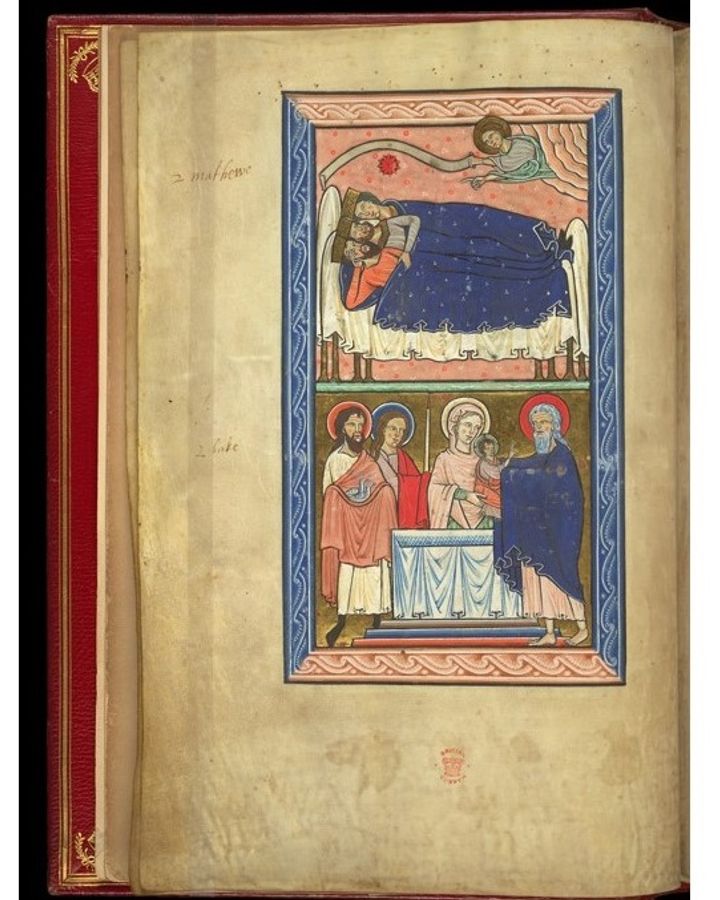
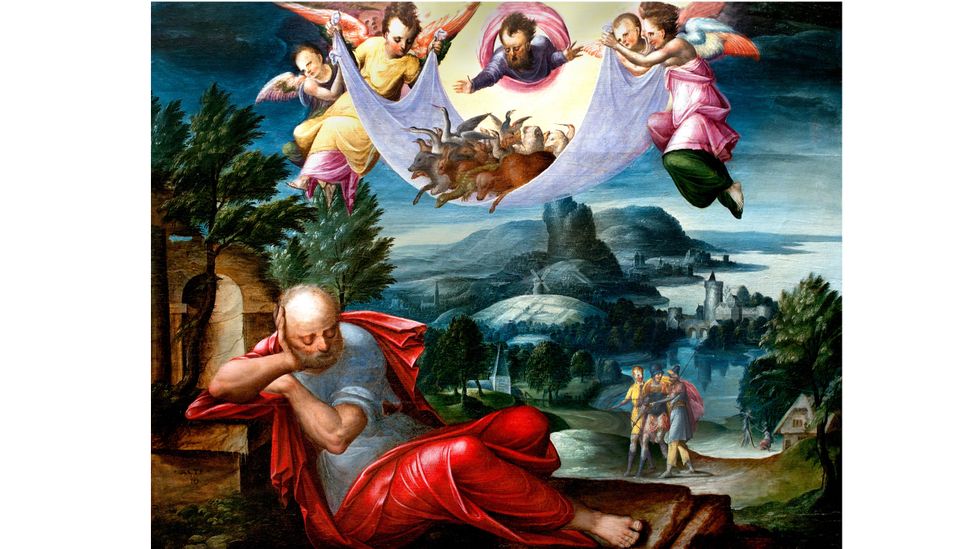
* The image of The Dream of the Magi is used with the kind permission of the British Library, where it forms part of their Catalogue of Illuminated Manuscripts.

--

Zaria Gorvett is a senior journalist for BBC Future and tweets @ZariaGorvettv

Christmas in july!!!!

Christmas in July, it sometimes make me wonder about many things. One of the most perplexing is how Sasquatch came to be a part of a holiday...