The sky is so blue and there is a gentle breeze, it's warm enough to comfortably work outside, but there is 5 inches of snow on the ground and more is coming ...... looking at seed catalogs, and filling tiny flower pots with potting soil is just not enough to express my Spring Fever. But this could help.
Yah know, some times i get very serious and this is one of them. Once upon a time i used to walk out and feed and water the rabbits, in my bare feet, my only concern was that there might be something sharp hidden in the snow that could cut me. Some people can get away with wearing flip flops in the snow, they are much too slippery for me, so i just took them off.
That doesn't mean i am unfazed by the cold, not at all, not at all. Cold weather is dangerous and i respect it. You don't have to be a mountain climber or a long distant skier, or someone caught in an avalanche to suffer ill effects from Witer's bitter chill.
How to Dress for Cold Weather, Explained by an Arctic Researcher
Rebecca Jennings
10–13 minutes
Photo by iStockphoto/Getty Images
Every bad winter that comes around, American need to
relearn how to deal with, and dress for, cold weather. It’s more
important now than ever, when staying safe out of reach from coronavirus
means spending more time outside in the cold. When it comes to dressing
for a hard winter, there are people who are experts in this particular
area, for whom brutally cold environments are just part of the job.
Cathy Geiger is a professor at the University of Delaware, and has
studied the behavior of sea ice at both the arctic and Antarctic poles
for more than three decades.
Having worked on 10 polar expeditions, Geiger’s seen
a lot (including some gross frostbite stuff that involves eyelashes;
we’ll get to that). For the sake of clarity, because layering for
sub-zero temperatures is pretty complicated, the following information
will be distilled via a handy question-and-answer format.
What’s the best layering method?
There are a couple main tenets of layering that
Geiger adheres to. The first and most important of them is to wear lots
of loose layers — the key word here being “loose.” That’s because the
insulated air that circulates between each layer is what’s actually
keeping you warm. The more active you plan to be, the fewer layers you
should wear.
Another important tip she stresses is that good body
circulation is the key to warmth. “If you’re wearing 700 layers and
you’re like the Michelin man and you can’t move, all that padding isn’t
going to do you any good if you block off your circulation,” she
explains. “[If you wear] four pairs of socks stuffed in a boot, your
toes are going to get frostbite because everything’s too tight. There’s
no blood down there.”
Cathy
Geiger, 200 miles north of Barrow, Alaska, on an expedition in 2007.
“Notice the use of a baseball-type cap.” Robert Harris
When Geiger goes on an expedition where temperatures
can plunge between 30 degrees and 40 degrees below zero, she usually
layers about four pairs of oversized long johns in moisture-wicking
synthetic fabrics or merino wool, a Dickies bib, a Turtle Fur for her
neck and face, and at least three pairs of gloves (the thinnest layer
goes on first, the military surplus ones go on last), topped with
Carhartt coveralls and knee pads. Over that, she wears an extra-large
L.L. Bean extreme-weather coat shell.
“The shell stops the cold from breaking through, so
it’s just like weatherizing your roof: Your body is a personal shelter.
In really cold weather, you want to wrap your body like you would
insulate your house.”
What are the best fabrics to use to shield from wind and cold, and how should I layer them?
Conventional wisdom says to keep away from cotton,
because it has virtually zero moisture-wicking properties. Instead,
Geiger says, make sure that the fabric closest to your skin is made of
synthetic fabrics or merino wool.
Why are moisture-wicking fabrics so important?
“Sweat is what will kill you,” she says. “The big thing to do is [move]
slower than you think. Once you get into the zero digits, you don’t want
to start running around and warm up so much that you break a sweat.”
And regardless of how you feel about Canada Goose,
they’ve done hoods right. Geiger recommends hoods with fur (or faux
fur) trim because “fur creates friction that holds back the wind.”
What’s the best way to protect my skin from the elements?
You should always be wearing sunblock on your face,
but before heading out into a snowy environment, there’s one place that
people might miss: the underside of their nose. “Snow reflects!” she
warns. Once you’re back inside, go for the usual suspects that promise
to moisturize: heavy lotions, balms, and Vaseline.
Commuters in downtown Chicago on January 31, 2019. Scott Olson/Getty Images
Do hats really matter?
Yes! And they require their own layering methods,
too. While you probably won’t be wearing goggles during your commute to
work, you can still rely on the tenets used by arctic researchers to
protect your eyes and face.
“If you put on a baseball cap and [then] a snow hat,
the ball cap creates a brim, [and] it’s amazing how much sun that
blocks,” she says. “It’s a great wind blocker.” Another handy use for
baseball caps: When you wear sunglasses, the brim traps the heat that
would have been lost through the top of the shades.
And now is the portion of the conversation where
Cathy told me something truly wild; in order to properly describe it, I
have included the full transcript:
The eyeball is really a serious place where you do not want things to freeze.
Wait, how do your eyeballs freeze?
You’ll notice it because you’ll realize your eyelashes are starting to freeze.
What?
We’ve had situations where people have gone, “Oh my
god, what did I just do? Please look at me.” There was a little bit of
tearing because when the wind blows really hard in your eye you will
start to tear, and then that can cause your eyelashes to freeze. If you
try to open [your eyes] too fast, you can actually rip the eyelashes
out.
Oh my god!
That’s happened to a friend. When you’re talking
-20, [you see] freezing of contact lenses and tearing your eyelashes out
because they’ve frozen together. If that happens, the first thing you
do is leave your eyes closed. If you have sunglasses or anything on,
take them off and put your mittens right over your eyes. Warm it up
before you try to open your eyes and rip your eyelashes off.
So yes, hats matter.
My feet get really sweaty if I wear bulky socks. What’s the best way to layer on your feet?
Remember the thing about loose layers? That’s
important here, too. “If you’re really, really, really cold, you
actually want your feet to be in something so loose that your boot’s
moving around a bit,” says Geiger. She never puts on more than two
layers of socks (any more and your feet will slide around too
much): a moisture-wicking one closest to the skin, followed by a thicker
wool pair. And obviously, wear a waterproof boot because, once again,
“wet will really kill you.”
A woman walking in Brooklyn on January 31, 2019.
ANGELA WEISS/AFP/Getty Images
What stupid things do people do in the cold that they really shouldn’t?
Strangely enough, one of the worst mistakes people
often make is more mental than physical. “If you’re excited and you’re
tense, you’re going to block your circulation,” she says.
Instead, the key is to warm up before you go
outside. “Saunas exist from northern cultures for a really good reason,”
she explains. Try drinking warm soup broth before heading out rather
than coffee or tea, because “tea makes you pee.”
How do I know if I’m getting frostbite? And what do I do about it?
Your first warning that you’re getting too cold is
how your fingers and toes feel, since they’re the farthest from your
heart. “When I was taking students out on the ice, that’s the first
thing I’d ask: ‘How’s everybody’s fingers and toes? All 10? All 20?’ I
wanted them to feel that they can count all 20 digits because they’re
your remote sensors.”
Geiger stresses that cold extremities need to be
tended to immediately. If your hands and feet are starting to hurt, stop
what you’re doing and warm them up, either by going inside or using the
tools available to do so (there are strategies used by fisherman and
the Inupiat people of Alaska that involve using one’s own snot and/or
pee that hopefully you will never have to use). Any sign of “bleak white
skin,” she adds, also means that blistering may have already started.
So, uh ... what’s happening with the sea ice?
One of the most shocking things Geiger said was that
though she’s been working on sea ice for decades, within the last 10
years it’s gotten so thin that it’s unsafe to camp there.
A satellite image of the polar vortex in 2014 that covered the entire northern US.
NOAA via Getty Images
“I’ve been on the sea ice since 1984 and in those
days it was great. We just took a boat up there, walked on the ice, and
worked on it. 2007 was the last time we could really just camp on the
ice. Since 2007, the ice is too dangerously thin to go out and just work
on it anymore. You’ve got to work on a boat.”
Because her work has been laden with political baggage due to the Trump administration’s denial of climate change, polar research has been largely on hold since 2016 [this article was written in December 2020].
And yet despite how politicians may feel about the
term “climate change,” this, unfortunately, does not mean that it is not
happening. Geiger explains that because the planet is warming so quickly, the temperate climates that many people currently inhabit will someday not exist at all.
“The fact is that as the poles get warmer, things get wavier,
and as things get wavier, the tropics and the poles are all that we
have left, and we don’t have that nice, cozy, temperate, moderate
climate,” she says.
“And I think, if the news could communicate that,
people would say like, ‘Holy expletive. There’s no temperate zone
anymore?’ It’s like, ‘Yeah, that’s the consequence of the poles warming
faster than the tropics — you lose the temperate zone. And once you do
that, that really does make life miserable.” Which is to say, the
coronavirus isn’t the only extremely depressing part of this winter.
In 1959 i went to the movies with my cousins from the city, we saw "Hannibal", they were enjoying the battle scenes while i enjoyed the architecture and views of the Alps. And that began my interest in the ancient world.
Nine Mythical Places Archaeologists Think May Have Actually Existed
Shoshi Parks
15–19 minutes
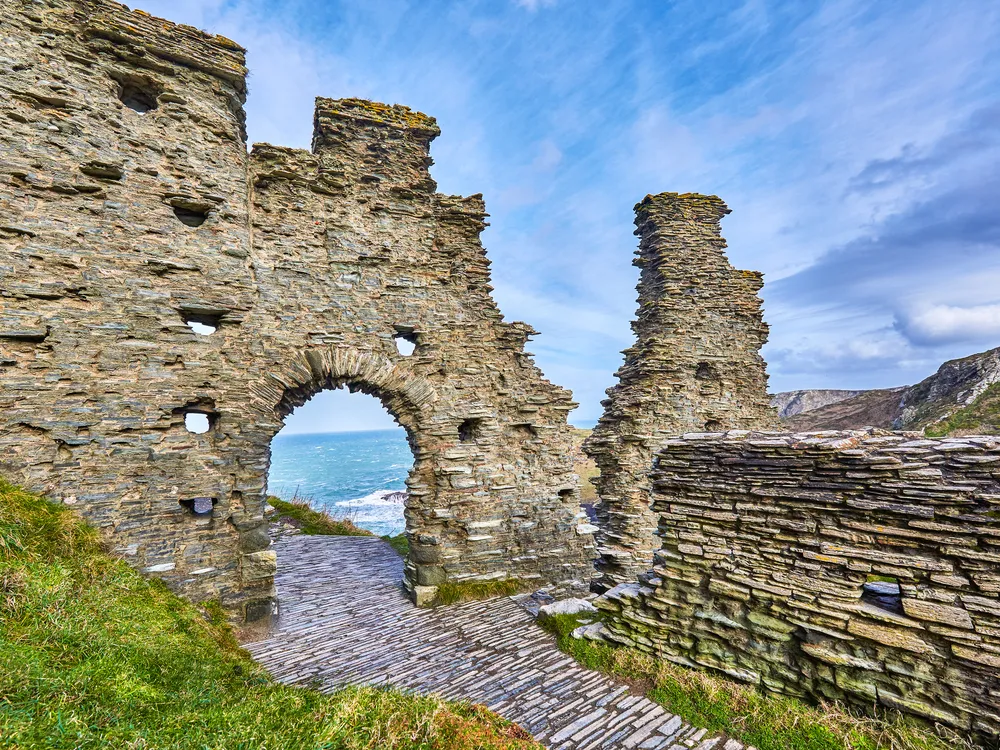
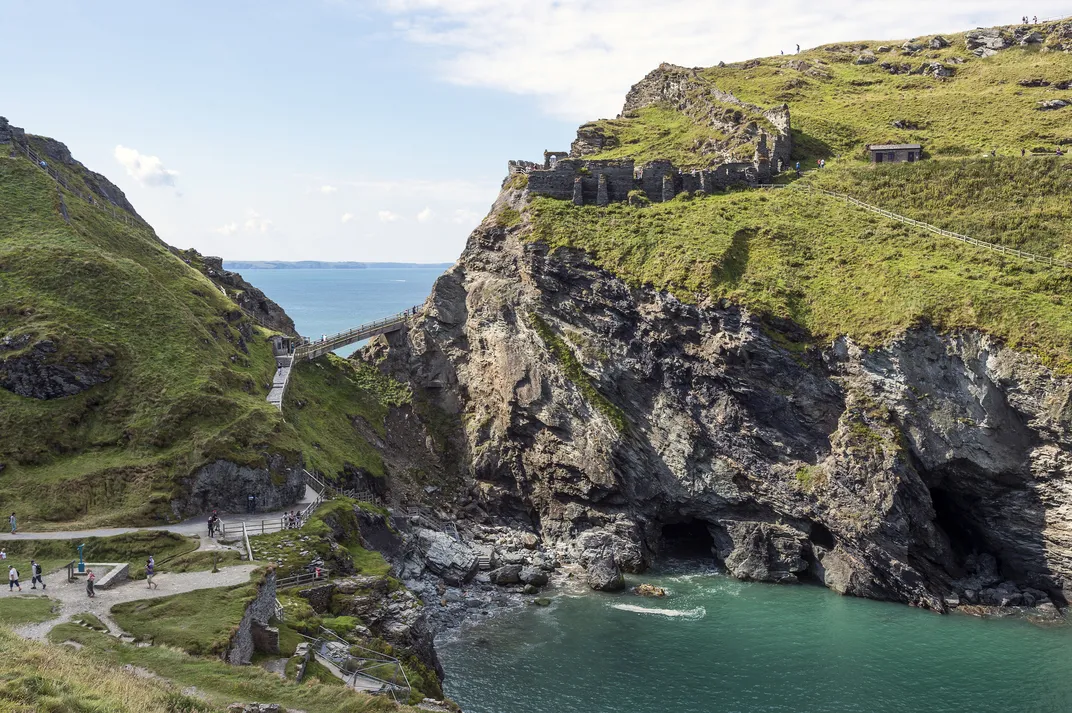
Tintagel Castle, a dramatic 13th century fortress on the
rocky coast of Cornwall, England, has been associated with King Arthur.
Peter Unger/Getty Images
History is haunted by mythical lands. From the homes of
legendary kings to the earthly abodes of gods and monsters,
civilizations have always dreamed of extraordinary places hiding in
plain sight.
But while it’s unlikely that either Atlantis or Shangri-La was real,
there may be more truth to some myths than anyone realized. A growing
body of archaeological research suggests certain places—the Minotaur’s
maze from Greek mythology; Vinland, the first North American Viking
settlement mentioned in the Norse sagas; Solomon’s Temple described in
the Bible; and others—could have been more than just fables.
From western Turkey to Jerusalem and coastal England to the Colombian
Andes, evidence indicates that these nine mythical places may have
actually existed.
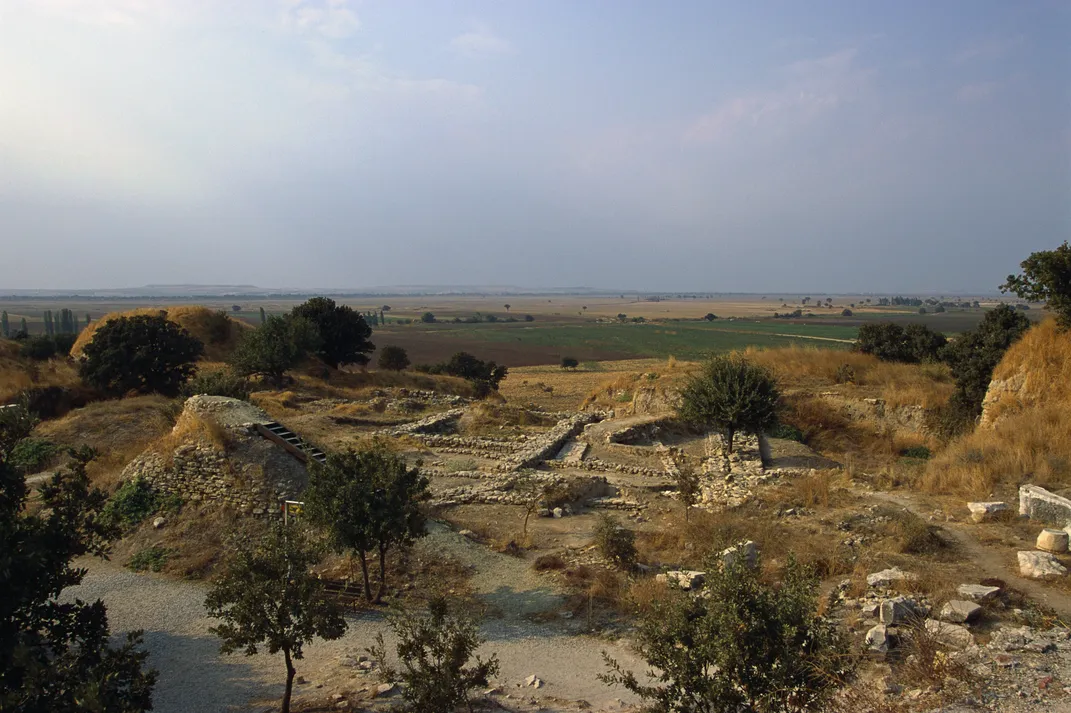
Troy, Turkey
Ruins at Troy
Dave G. Houser/Getty Images
Troy, the city at the heart of Homer’s Iliad and Virgil’s Aeneid, is one of the most legendary sites of classical Greek mythology.
Fantastical details are woven into the tales—the interference of the
gods in the Trojan War, the half-divine heritage of the Spartan hero
Achilles, the apocryphal gift of a wooden horse filled with Greek
soldiers—but archaeologists believe some aspects of the stories were
true. “I believe the Trojan War was a historical event,” says Rüstem
Aslan, director of excavations at Troy in present-day Turkey, just “not
the kind that Homer described.” Close to 150 years of excavations
at the site have revealed that, not only was it occupied for 4,000
years, but also during the Late Bronze Age (when Homer’s Trojan War
allegedly took place) “the Trojans suddenly began preparing for an
insurgence from the outside,” says Aslan.
While researchers are still looking for proof of the battle that
raged beyond the city’s walls for ten long years, Aslan does not doubt
that it’s there, buried under 65 feet of alluvium,
which built up alongside the shifting Scamander (now known as
Karamenderes) River nearby. It’s the mouth of that river that makes Troy
so important in the first place. “Troy is settled again and again
because if you control the harbor, you control the Mediterranean and
Aegean Seas,” he says.
Troy, however, isn’t the only mythological site discovered in the region’s archaeological record. Apollon Smintheion (an imposing temple built for the god Apollo on top of a settlement from the sixth century B.C.E.), Antandros
(an ancient shipbuilding settlement) and the sacred forests of Mount
Ida are all historical sites that archaeologists have found to
correspond to places mentioned in the Iliad and Aeneid. Together, they make up Turkey’s Aeneas Route,
a tourist corridor following the epic journey taken by Aeneas, the
father of Rome, after escaping Troy’s sacking by the Greeks.
Gorham’s Cave (Medusa’s Cave), Gibraltar
Gorham's Cave Gibraltar - A UNESCO World Heritage Site (5min)
To ancient mariners, Gorham’s Cave, a natural cavern at the base of the Pillars of Hercules in the Strait of Gibraltar, was the edge of the known world. But a 2021 study in PLOS One
suggests that the subterranean site may have played an even greater
role in Greek mythology. Deep inside the cave, archaeologists found
fragments from the head of a large, ceramic Gorgon dating to around the
sixth century B.C.E. The Gorgons were three monstrous sisters who
terrorized Greek sailors by turning them to stone with a single look.
Legend places their lair, in which the hero Perseus beheaded the most
evil of the siblings, the snake-haired Medusa, while she slept, near the
Rock of Gibraltar.
Other Medusa figures have been located in the region, but this is the
first to be discovered inside a cave. Combining archaeological evidence
with historical accounts, geography and myth, researchers have
concluded that Gorham’s Cave was likely the spiritual site that early
seafarers believed to have been the home of the Gorgons, and the site of
Medusa’s defeat. Visitors can examine the cave’s entrance on biweekly
summer tours offered at the British territory of Gibraltar’s Gorham’s Cave Complex World Heritage Site, a stunning limestone ridge off the southern tip of Spain.
Tintagel Castle (King Arthur’s Castle), England
Tintagel Castle
Westend61/Getty Images
Since writer Geoffrey of Monmouth described Tintagel Castle as the place of King Arthur’s
conception, the dramatic 13th-century fortress on the rocky coast of
Cornwall, England, has been associated with his legend. But until
recently, no one knew that beneath the castle’s ruins lay an even older
settlement with features that could correspond to the legendary leader.
We have “very strong evidence that it was an exceptional place where
goods and luxury commodities were arriving from the Mediterranean world
in great numbers,” says archaeologist Jacky Nowakowski, project lead for
the Tintagel Castle Archaeological Research Project.
Though the team can’t say for sure who ruled the earlier site, King
Arthur “fits the profile in terms of what we’d expect at this critical
time in British history of the fifth and sixth century,” she explains.
What Nowakowski does know for certain is that, whether he was actually there or not, King Arthur has “very much become a part of the story”
handed down over generations around Tintagel. Even the castle built
there by Richard of Cornwall around 1203 C.E. was constructed, in part,
to draw a connection between his authority and the legendary king.
Interestingly, though, Arthur’s myth is not the only one to which
Tintagel is connected. “There’s also the story of Tristan and Isolde,”
says Nowakowski, a Celtic legend retold in the 12th century as a story
of forbidden love in which the knight Tristan falls for the princess
Isolde even though she is set to marry King Mark of Cornwall. “If you
look across Cornwall, there are several places you can pinpoint that are
associated with King Mark, Tristan and Isolde. The story was popularly
circulating around Europe at the same time as King Arthur’s, but it’s
not attached to Tintagel in the same way. I think that’s partly to do
with the success of Victorian writers and painters [who associated
Tintagel] with the ruins of King Arthur’s castle.”
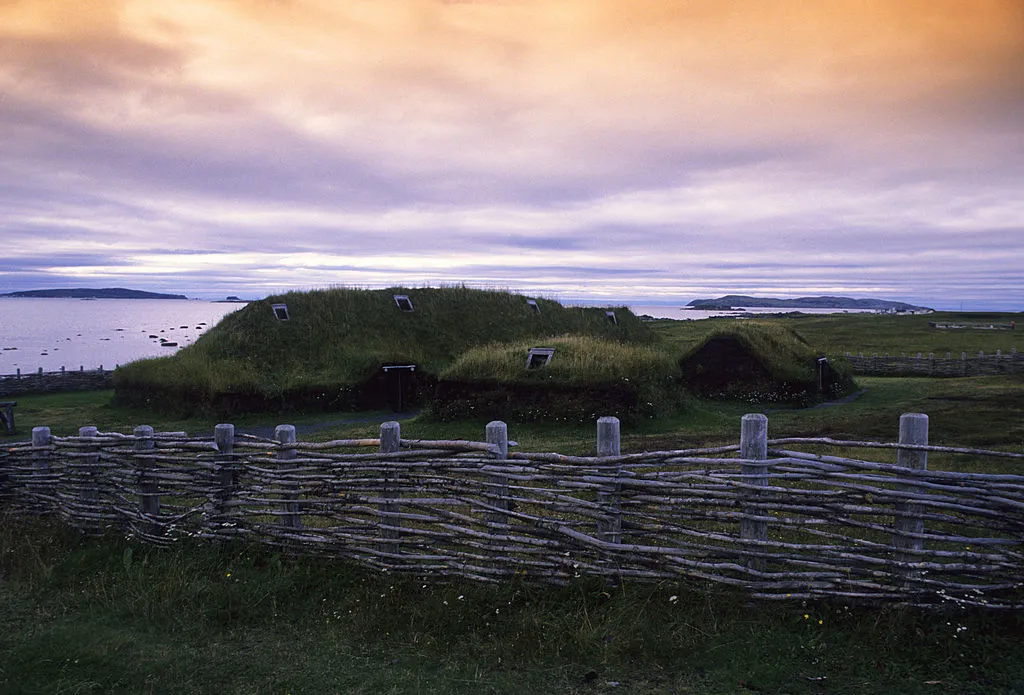
L'Anse Aux Meadows (Vinland), Newfoundland
Replicas of Norse houses at L'Anse aux Meadows National Historic Site
Wolfgang Kaehler/LightRocket via Getty Images
For years, explorers searched for evidence of Vinland, a far-off place of lush meadows, teeming salmon and wild grapes described in the 13th-century Greenlanders’ Saga.
If the legend was true, the seaside site briefly settled by Viking Leif
Erikson and his crew around 1000 C.E. would be the first place
“discovered” by Europeans in the New World, preceding Christopher
Columbus by almost 500 years. So, when evidence of Norse-designed
sod-walled buildings on the far north coast of Newfoundland, Canada,
were uncovered in the 1960s, archaeologists were hopeful that the site was the one.
The identification of other European artifacts—a bronze cloak pin, a
spindle whorl, a gilded fragment of brass—along with a place for
smelting and working iron soon followed, convincing scholars that the
site on which they’d stumbled was the fabled Vinland. Archaeologists
today continue to study the long-held secrets at what’s now called L’Anse aux Meadows National Historic Site; the site includes reconstructions of the original dwellings where the Vikings lived on-and-off for about 20 years.
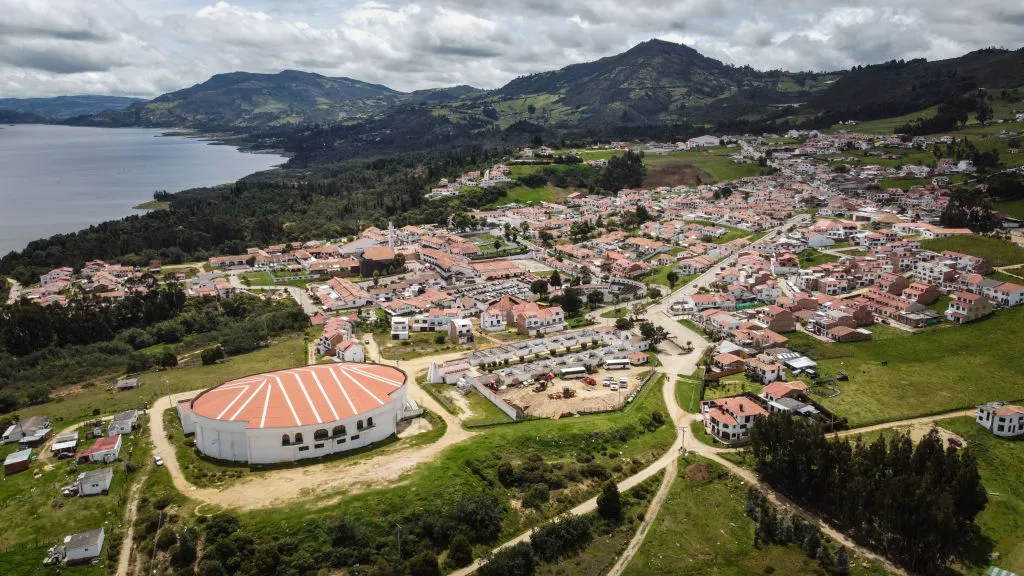
Lake Guatavita (El Dorado), Colombia
An aerial view of the town in Guatavita, Colombia, with nearby Lake Guatavita
Juancho Torres/Anadolu Agency via Getty Images
Spanish conquistadors first described a mythical South American
kingdom of unfathomable riches ruled by El Rey Dorado, a chief whose
initiation rites included covering himself in gold dust and ceremonially
dropping treasure into the center of a sacred lake in 1541.
In the centuries that followed, explorers searched feverishly for the
kingdom of “El Dorado” throughout Colombia, Venezuela, Guyana and
Brazil, but to no avail. Eventually, they gave up hope of finding the
site. Juan Pablo Quintero-Guzmán, archaeologist and curator at
Colombia’s Museum of Gold,
says that doesn’t mean there isn’t truth to the story. “All lakes in
the Muisca territory were places of offering,” he says. “It is possible
that rituals similar to those of El Dorado were carried out in some of
them, but I believe that Lake Guatavita
was, for some time during the Muisca period [600 to 1600 C.E.], the
place where this ritual was carried out with the greatest impact.”
Over the past 400 years, numerous artifacts have been pulled from
Lake Guatavita—from tumbaga (an alloy of gold and copper), emeralds and
human-like clay vessels to hair, cotton and animal skulls. In his research,
Quintero-Guzmán has found evidence that rituals were taking place at
the water’s edge, at what “could have been a temple, a ceremonial site
intended for making prestigious offerings,” he says. While the findings
do not definitively prove that Lake Guatavita was the site spoken of by
the conquistadors, “it does not contradict the possibility that the
legendary El Dorado ceremony was carried out here,” either, says
Quintero-Guzmán. For now, at least, the Muisca chiefdom of Guatavita,
once a prestigious ceremonial pilgrimage site known for the skill of its
goldsmiths, is the most likely origin of the myth.
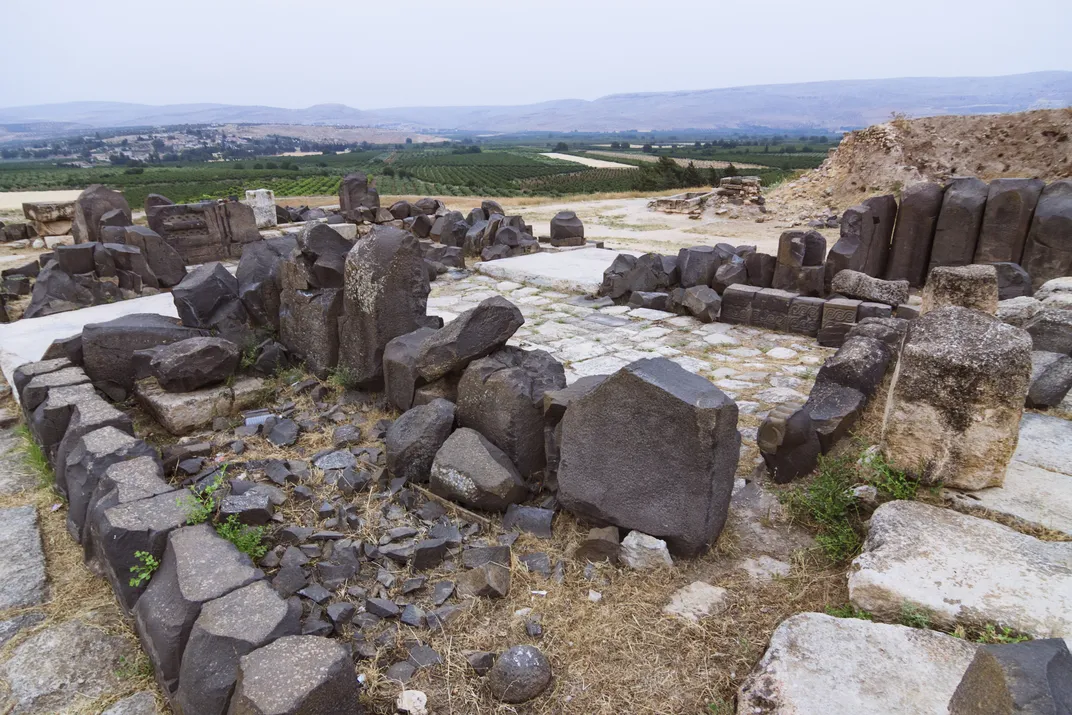
Ain Dara (Solomon’s Temple), Syria
Ruins of Ain Dara
Luis Dafos/Getty Images
In 2018,
armed conflict destroyed Ain Dara, a 3,000-year-old temple in
northwestern Syria that some archaeologists identified as the biblical
Solomon’s Temple in the 1980s. The ancient site shared more features
with the temple described in the Book of Kings than any uncovered before or since,
including walls carved in reliefs of lions and cherubs, a courtyard
paved in flagstones, a monumental staircase guarded by sphinxes and a
multistory hallway. Even its location on a raised platform overlooking a
city echoes the temple’s depiction in the Bible. Although the bombing
and plundering of the site prevents archaeologists from finding more
evidence of its legendary status, some of its most important artifacts
can still be seen at the National Museum of Aleppo.
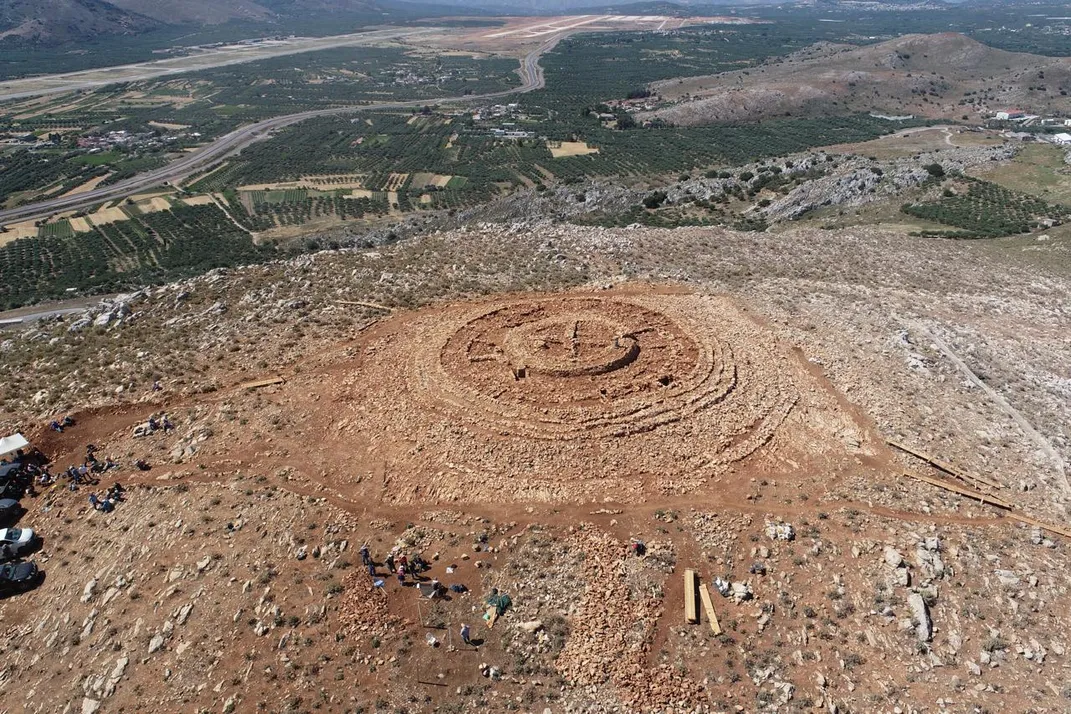
Kastelli (Minotaur’s Labyrinth), Greece
Animal bones found at the site suggest it may have been used for ritual ceremonies.
Greek Ministry of Culture
While building a new airport on the island of Crete this summer, workers uncovered something unexpected.
With its central circular building surrounded by eight stone rings
intersected by walls, the site resembled the style of tomb constructed
by the Minoan civilization around 2000 to 1700 B.C.E. But to anyone
familiar with Greek mythology, the spot evoked something else, too: the
Minotaur’s labyrinth.
The Minotaur, a ferocious creature with the head of a bull and the
body of a man, was trapped in a maze built by the Greek architect
Daedalus. Every seven years, Athens sacrificed seven young men and seven
young women to the monster until Theseus, a prince of the city,
volunteered to kill him. Tracing his route with a ball of thread,
Theseus found his way through the labyrinth, murdered the beast, rescued
his not-yet-sacrificed victims, then followed the thread back out to
safety.
Although archaeologists have yet to thoroughly study Kastelli, its
architectural similarities to the mythical maze, combined with evidence
of ceremonial offerings and communal feasting found at the site, may
suggest that it was part of the story’s origin. The site is not open to
the public, but Knossos, the ancient palace previously believed to be the site of the Minotaur’s labyrinth, is.
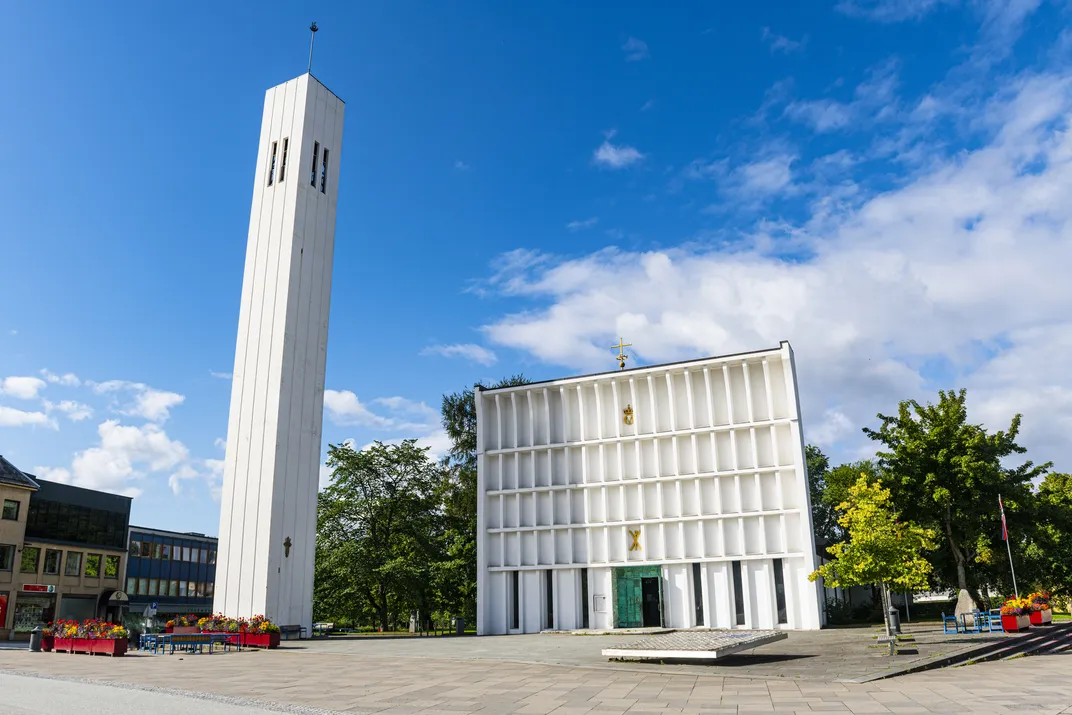
Steinkjer, Norway
Artifacts suggest that Steinkjer was the major trading city
described in the Norse Sagas—and that its center was likely where its
modern church stands today.
Westend61/Getty Images
Although the Norse sagas tell of an ancient trading center that was,
for a brief period, the largest in the Viking world, no one knew where,
or even if, it really existed. Then, in 2013, archaeologists found some intriguing evidence.
In archaeological investigations conducted before expanding Norway’s
main highway near Steinkjer in Nord-Trondelag County, researchers
uncovered two separate boat graves associated with a wide variety of
high-status trade goods, including a silver button, a set of balance
scales, imported jewelry and amber beads. The findings add to the area’s
unusually rich archaeological record, which includes 22 examples of a
special trade-related Viking-age sword. Taken together, the bevy of
artifacts suggest that Steinkjer was the major trading city described in
the Norse sagas—and that its center was likely where its modern church stands today.
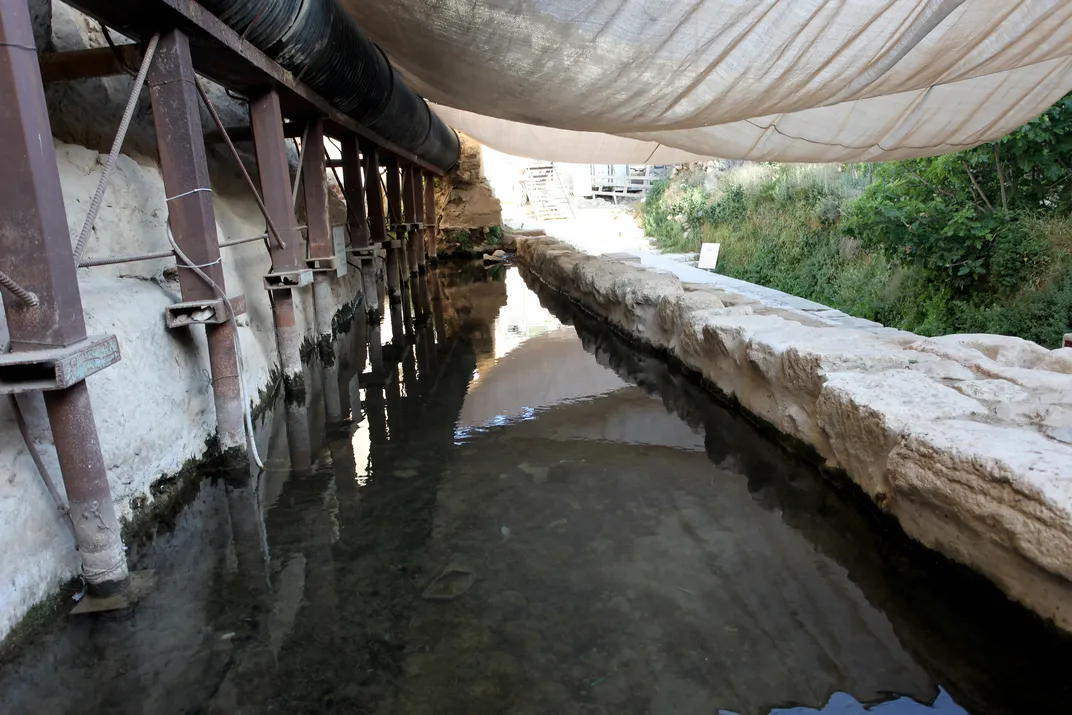
Pool of Siloam, Jerusalem
Pool of Siloam
Jason Maehl/Getty Images
In the New Testament’s Gospel of John, Jesus returns the power of
sight to a blind man at the Pool of Siloam in Jerusalem. Christians
searched for the site for centuries before repair work on a water pipe south of the Temple Mount in 2004
revealed two ancient stone steps. In the archaeological investigations
that followed, researchers discovered a 2,700-year-old, 225-foot-long
trapezoidal pool, which they believe to be the site where Jesus
allegedly conducted his miracle. In addition to being an important part
of early Jerusalem’s water system, the architectural feature was also
likely a ritual bath used by visiting pilgrims. Careful excavation and restoration work over the past 20 years have preserved the ancient Pool of Siloam, which opened to the public last year as part of the City of David National Park.
13 Little Ways Parents Made Their Kids' Childhood Feel Magical
Kelsey Borresen
7–8 minutes
Experiences that may not seem remarkable to an adult end up being some of the most magical and meaningful memories for kids.
Writer Molly Wadzeck Kraus posed a question on X,
formally known as Twitter, in August, asking adults what little things
their parents did that made their childhood feel magical — things they
still look back on now with “such fondness and clarity.” Lots of folks
chimed in with theirownstories.
I
saw a TikTok recently about little things parents did to make childhood
magical. Things adults remember now with such fondness and clarity. I
can’t find it again so I’m opening it up here. What’s something your
parents did that brought magic to your childhood?
Psychotherapist Andrea Dorn,
founder of Bloom Therapy and Wellness Center in Columbia, South
Carolina, said these kinds of magical moments from childhood tend to be
memorable because they “involve out-of-the-ordinary experiences that
leave emotional imprints that go far beyond the event itself.”
“They
stand out because they often make a child feel a sense of significance
and awe and allow them to feel seen, valued and loved in a way that
ordinary, more routine experiences may not,” Dorn, author of the
children’s book “Welcome to Therapy: a Mindful Introduction to Counseling for Kids,” told HuffPost.
“Whether
it’s a special tradition, an unexpected adventure, or a simple,
heartfelt gesture, these moments stay with us because they evoke
feelings of security, belonging and wonder, and these are emotions that
positively shape our sense of self, our memory, and how we view the
world,” she continued.
This X thread inspired us to ask the
HuffPost audience to share the little magical moments created by the
parents and caregivers in their lives. Read their sweet stories below:
Responses have been lightly edited and condensed for clarity.
1.
“My mom would set up our tent downstairs or create a ‘beach picnic’ in
our living room during cold Minnesota winters when we couldn’t go on
vacations to warm destinations.” — Karolyn S.
2.
“My dad used to tell me he could stop the rain but only at certain
points. We had two overpasses over the road to our neighborhood. When we
went under the rain would ‘stop’ when he said it would.” — Sara A.
3.
“On the night of our birthdays growing up, before we went to bed, my
mom would come lay in bed with each of us kids and tell us all about the
events of the day we were born. What the weather was like, what song
was playing in the delivery room, how excited she and my dad were to
meet each of us. She tells us sentimental things and hilarious things.
She remembers so many little details! I’m almost 46, and I still ask her
every birthday to tell me about the morning I was born. Any time I hear
Chuck Mangione’s song ‘Feels So Good,’ I know that was the moment my
mom met me for the first time.” — Kate F.
4. “When
I lost a tooth, my mother would sprinkle baby powder on the bedside
table so we could see the tooth fairy’s footsteps. Once I fell asleep,
she would walk through the powder with her fingertips so it would look
like tiny footsteps. I absolutely believed in the tooth fairy!” — Suzanne P.
5.
“We lived in rural Wisconsin where the snow would pile up over winter.
My mother would dig out forts with steps and benches or build walls with
a plastic snow block maker. She would sculpt huge animals — I
distinctly remember a turtle — and would also create sledding hills. She
must have spent hours creating these wonderful play areas for my
sisters and me.” — Kendra Q.
6. “My dad
said ‘yes’ to as many things as possible. He said you are only a kid
once so let’s make the most of it. Yes to movies on weeknights,
basketball in the park, yes to family drives on Sundays, yes to ice
cream, friends coming over, concerts, going to all the games, etc.” — Rachael L.
7.
“We are from Minnesota where winters get very cold. We had electric
blankets on our beds. My mom would put my pajamas under the blanket. So
when I would go to bed, my pajamas and sheets were nice and warm.” — Mamie F.
8. “Christmas!
My parents made it magical, including candy canes on the fireplace, to
gifts wrapped in all different colors and our stocking hung on our
bedroom door knob. They certainly made it special!” — Suzanne C.
9.
“My mom told me that the moss that grew around one of the big trees in
our yard was actually ‘fairy beds’ and fairies lived there. I would sit
outside and try to find fairies for hours.” — Logan T.
10. “My
mom would wake me up in the middle of the night to play in the snow or
to watch a meteor shower. She painted scenes on my walls and stars on my
ceilings and scrawled book quotes on my door. She wrote me letters from
fairies detailing their adventures in fairyland and asking me questions
all about myself. She remains the most magical woman I know.” — Sara M.
11.
“On Sundays, my dad and I would go to the matinee at the cinema to see
cartoons. After that, we’d feed the ducks in a nearby park and then have
a cheeseburger with a Coca-Cola. These things were not widely available
in the ’70s, so they were a treat.” — Giedre D.
12.
“My mother let us play outside in the rain in our bathing suits and
swim in the puddles as long as there was no lightning or thunder. I got
so dirty and loved her for it.” — Sherrill L.
13. “My
grandmother would have me, my brother and my cousin up for a week’s
vacation every year with her and my Grandpop. Sometimes at night we
would get scared, and she would come in with ‘magic pixie dust’ and
sprinkle it over us to put us to sleep. Worked every time. I still have a
vial of her pixie dust at home.” — Jenna F.
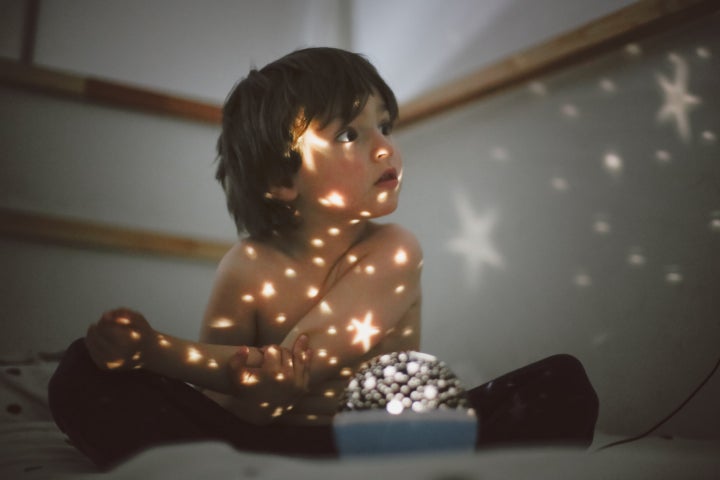
Image taken by Mayte Torres via Getty Images
The takeaway here: You don’t need to do anything particularly extravagant to make magic for a child.
“In
fact, magic can often be found in the small, intentional moments that
break the routine in simple ways,” Dorn said. “It’s about being present
and making your child feel truly seen.”
Parents and caregivers should not feel pressure to create “perfect” moments, Dorn stressed.
“The
most magical experiences often arise spontaneously when you’re engaged
and enjoying time together,” she said. “It’s less about perfection and
more about showing up with love, curiosity and willingness to engage in
whatever opportunities for ‘magic’ might come your way.”
Making
magic for a child isn’t always about doing something extra either —
sometimes it’s about slowing down enough to notice the magic that’s
already around us, Dorn said. And adults can benefit greatly from this,
too.
“As grown-ups, we often get caught up in the busyness of
life and forget to experience that sense of wonder ourselves,” Dorn
said. “By allowing yourself to engage in magical moments that present
themselves, you not only create connection and lasting memories for your
child, but you can also engage with the part of yourself that enjoyed
these magical moments in your own childhood.”
, Right upfront I digress, rock loving oldie that i am, here's my not so humble opinion
In this post are several references to the power of turquoise ...but in fact it is you, not the stone that contains the real, life, the real power is you. It's good to have a lovely stone to help focus.
You can use any stone to focus your goals. Stones sure are cool and they sure are pretty reminders, are they not?
·
,
𝗧𝗵𝗲 𝗦𝗽𝗹𝗲𝗻𝗱𝗼𝗿𝘀 𝗼𝗳 𝗧𝘂𝗿𝗾𝘂𝗼𝗶𝘀𝗲
With its myriad hues, the color turquoise perpetually inspires. Comprised of green, blue, and yellow tones, turquoise is a striking combination of these color wheel beauties. Never one to boast, turquoise is radiant without knowing it. With its humility and shifting charm, there’s much to love about this greenish-blue shade.
𝗔𝘄𝗮𝗸𝗲𝗻𝘀 𝗘𝗺𝗼𝘁𝗶𝗼𝗻𝘀
Whether you lead with your head or your heart, the color turquoise speaks to both. By pairing these two powerhouses together, the color turquoise gives rise to healthy emotions. Color psychology suggests that turquoise both heals and controls our feelings. As a result, we gain emotional stability. However, excessive use of the color turquoise may precipitate emotional imbalance.
𝗢𝗳𝗳𝗲𝗿𝘀 𝗣𝗼𝘀𝗶𝘁𝗶𝘃𝗲 𝗘𝗳𝗳𝗲𝗰𝘁𝘀
As tranquil as it is inviting, turquoise restores, warms, and soothes the soul. We can ascribe its peaceful presence to its blue undertones, its energizing spirit to its yellow elements, and its encouraging aspects to its green components. Together, these three hues make turquoise the uplifting and relaxing color that it is. To combat stress and fatigue, turn to the color turquoise. Its serene and sunny disposition won’t disappoint.
𝗔 𝗚𝗿𝗲𝗮𝘁 𝗘𝗺𝗲𝗿𝗴𝗲𝗻𝗰𝘆 𝗖𝗼𝗻𝘁𝗮𝗰𝘁
In the throes of a crisis, allow the color turquoise to talk you off the ledge. Turquoise helps us think clearly, making it the ideal color to have around when an emergency arises. Not only does it foster sound decision-making, but it also promotes structure. When we see the color turquoise, it makes us want to be more organized. It doesn’t demand that we get things in order. Instead, it merely suggests it.
𝗘𝗮𝘀𝗲𝘀 𝘁𝗵𝗲 𝗡𝗲𝗿𝘃𝗼𝘂𝘀 𝗦𝘆𝘀𝘁𝗲𝗺
Reigning in emotions is easier said than done. The color turquoise facilitates this process by calming the nervous system. When our nerves are at ease, it bodes well for stress-free living. What’s more, it boosts self-assurance, making us more confident in our daily choices. For public speakers, seeing the color turquoise can offer a wave of stillness. When giving a speech, the color turquoise reminds us to get out of our heads. This enables us to remain focused and levelheaded.
𝗔 𝗦𝗽𝗶𝗿𝗶𝘁𝘂𝗮𝗹 𝗠𝗲𝗻𝘁𝗼𝗿
The color turquoise has the incredible ability to connect with our souls. It’s unassuming, so we don’t take offense when it offers guidance. Turquoise makes us feel more in harmony with our intuition. As we develop a stronger bond with our sixth sense, spiritual growth follows. Simply put, this stunning shade encourages us to expand our minds, diversify our understandings, and open our hearts.
We called it "Little Christmas", when we were kids, and looked forward to it and to a visit from LaBefana and /or The 3 Kings.
At our house we kept our Christmas decorations up until January 7th , the evening meal was always a bit fancier than usual, and the candle kept lit for the 3Kings was not relit because they had already found the stable where the Baby Jesus was born. That candle in a jar was probably my favorite decoration, because I got to light it each day at sunset.
Small gifts, humorous gifts were exchanged. Often the Three Kings camels left us a gift or two perhaps the camels deposited black jelly beans in the shoes we left out for them to fill. Sometimes Befana left "coal candy" for us all.
Celebrating , though not exactly the same way our ancestors did, was a connection to our ancestors.
LA BEFANA The Good Witch of Epiphany and the Cycles of Time...
Although
she first appeared in written reference in a poem from the mid-1500s,
this Strega Buona has been part of Italian custom and folklore since the
800s. Befana was always a figure of the people, a bony old lady, a
widow, who wore a dirty, patched dress and a black shawl. But she flew
on a broomstick. She was relatable to all the poor. In medieval Italy as
in all of Europe there was a huge divide between the wealthy and the
poor, and La Befana, as she was known and is still known to this day,
was no glamorous upper class lady. In her stories, she lived on her own,
alone in a small run down house, but she was a meticulous housekeeper
and not only swept her dirt floors each day, but the whole walk up to
her little shack. She was good at baking and loved to make breads and
cookies, and when there was enough sugar in her larder, even candies.
Her night of January 5th, the eve of Epiphany in the Christian calendar,
is even more important in Italy and to Italian children than Christmas
is for excitedly anticipating gifts and goodies. On that night, La
Befana flies on her broomstick all over Italy and down each chimney to
stuff stockings with little gifts and sweets for the children there.
That is why her dress and face are dirty with soot. If the home does not
have a chimney, she has other magical ways of getting in to fill the
children's stockings such as making herself tiny and coming through the
front or back door keyhole. Oh, but if the child has been bad, she or he
gets garlic bulbs and onions, and a piece of black coal. (Actually now
confectioners make a candy called carbone which looks like a lump of
coal.)
The history of how this good witch became and has stayed
so popular and alive is interesting, amazing, and of course has Pagan
origins. Otherwise, how could a witch have anything to do with
Christmas? She had to have been so popular and so powerful a spirit
being prior to Christianity arriving that the Church could not get rid
of her or assimilate her into the figure of Mary. So let's climb into
the Way Back Machine and find out just where she came from. First, her
name: although many believe her name derived from the Italian word for
Epiphany, epifania, because she began to have that association after the
Church in the 1200s declared the 6th of January as Epiphany (awakening)
when the Three Magi were supposed to have visited the child Jesus.
(I'll tell that story later.) However, because her origins seem to be
still older than Christianized Italy, there is another theory that her
name derives from the Greek word, theophaenia. meaning “manifestation of
God”. And she is posited as morphing or descending from the old
domestic Roman Goddess Strenia (or Strenua) who presided over the New
Year, purification, good health physically, spiritually, and
emotionally, and was a protector of mothers and children. This Roman
Goddess had a strong link with the Mother Goddess, Juno, and meshed with
an Etruscan Mother Goddess who presided over the same areas of life as
well as ancestral spirits, fertility, abundance, the forest, and the
cycles of the year.
This association with the Ancestors, or
ancestral spirits, is important because in pre-Christian Italy January
6th was the last day of the two week festival of Saturnalia which was a
huge celebration beginning on the Winter Solstice. It was on this last
day that the household spirits of the ancestors, the lari, were honored.
And it was on this day that people went to the Temple of Juno on
Capitoline Hill to have their fortunes for the new year told by an elder
priestess/oracle of Juno. This carried into the subsequent centuries as
a traditional time to do divination, with the 12 days between the eve
of Christmas and Epiphany seen as magical and associated with witches
and supernatural creatures. Before it was Christianized, some areas of
Italy had a festival on January 6th where the ancestors brought good
omens of abundance to the living and fortunes were told for the New
Year.
Also influencing this entity of Befana, were the Celtic
tribes who settled in northern Italy in the Pianura Padana and part of
the Alps. At this time of the year, they had huge bonfires for the
newborn Sun, to bring fertility to their crops and animals. The Celtic
female shaman/priestesses took the form of a winter hag Goddess in the
vein of La Befana to set fire to the wicker puppets which were also
burned at this time. This ritual carried over into the Italian villages
as they burned an effigy of an old woman in the town square, “The Old
Lady”, to burn away the old year, and allow the spring to grow from the
ashes. This was a symbol of the cycles of time and nature which always
begin and end and begin again. The broom on which Befana rides is also
linked to the Celts as they venerated and worshiped the spirits of
trees, and burning the wood of the bonfires was an act of purification
and cleansing. In this vein, Befana always sweeps the floor of the homes
she visits after she fills stockings, to cleanse the home so that the
New Year can come in uninfluenced by the troubles of the old year.
From
the British Isles to Russia, there are winter crone Goddesses who rule
those months of cold, barrenness, and darkness. They are great Mother
Goddesses who wish to keep their people alive and well during those
difficult months. These Goddesses were all-loving, generous, and
benevolent, and like Befana, rewarded the good and industrious and
punished the lazy, selfish, and disobedient. La Befana was the guardian
of the hearth and the home. And as she flew down the chimney, she was
also the link between the astral, celestial realms and the earthly. She
is one of these many crone Goddesses who represented the death of the
old year and the way-shower for the new year. She is sometimes
associated with Hekate as she rules that time “in between”, the time
between the Winter Solstice and the beginning New Year.
So to
funnel these thousands of years of story surrounding La Befana to the
present day, we come to the charming Christian story about her and the
eve of Epiphany which commemorates the day the Three Magi, or
astrologers/ sorcerers got to where Jesus and his parents were in order
to honor the child with precious and rare gifts usually given to
royalty. The Three Magi were traveling toward Nazareth to find the child
Jesus and with their camels, servants, provisions, they made quite a
procession. Befana was out in front of her house sweeping the walk with
her broom. She was quite dazzled by this exotic group.
Relieved
to find someone friendly on their travels where they might take a rest,
they asked Befana if they might rest there for the night. She said she
had only a small place and nothing fine to offer them, but they wanted
to stay with her. So she fixed them a simple supper and offered them
places to sleep. While they were there, they explained to her where they
were going and who they expected to find. Because of her enormous
kindness to them in her poverty, they asked her to accompany them to
find the holy child. But Befana declined saying she had so much
housework to do that she couldn't just shut up her little home and
leave. The next morning the Magi went on their way continuing their
journey.
After they had gone, Befana began to think she had made
the wrong decision. She made up her mind to bake some goodies for the
holy child, and along with trinkets she had made for children in the
village, put them in her big market basket and catch up with the Magi.
So she baked and wrapped and tucked it all into her basket. She swept
out her home one last time, closed the door and started after the Magi.
She never caught up with them, and in fact got hopelessly lost. So she
began flying over the villages on her broom searching for the holy boy.
Since she didn't want to miss him, she decided that she would just fly
down every chimney of every house with children and leave some of her
bakery and trinkets for every child.
That's the story that
every Italian child knows by heart. La Befana was, up until recent
decades, the main excitement for children in Italy in the Christmas
season. She would get letters written to her about what presents a child
would like, or wishes made to the moon for gifts. And her handiwork
would be found on the morning of January 6th in the stockings the
children hung on their bedposts or by the hearthfire – sweets, toys,
books, figs and dates, and nuts. Unless you had been a bad child, of
course. Then you got bulbs of garlic, onions, and a lump of coal, or
that substitute candy, carbone.
This powerful Goddess who
presided over the turn of the year, the cycles of the seasons and time,
has become a charming, benevolent crone witch who truly could not be
more beloved in her native land. The place in Italy where she is
believed to have had her home is Urbania, and every year, the festival
there surrounding her grows. In recent years there has been as many as
50,000 people there for the week of January 5 and 6, reveling as they
used to in days of old.
All Hail La Befana! The Good Witch of the magic of the Winter Solstice. May she never cease to fly on her broom on the eve of Epiphany!

 Herbs That Root in Water — But Prefer Soil Later
 Vegetables That Regrow from Scraps in Water
 Starts in Water, Needs Soil for Real Harvest
 Essential Care Tips