I was one terrified little kid when Godzilla appeared on the screen in 1954...you see there was a mine near our home and I was sure that Godzilla hung out there. All the big kids agreed.
I lost my fear pretty quickly, and became a real fan, simply loved Baby Godzilla,well most of them. And have seen every movie, at least I think I have.
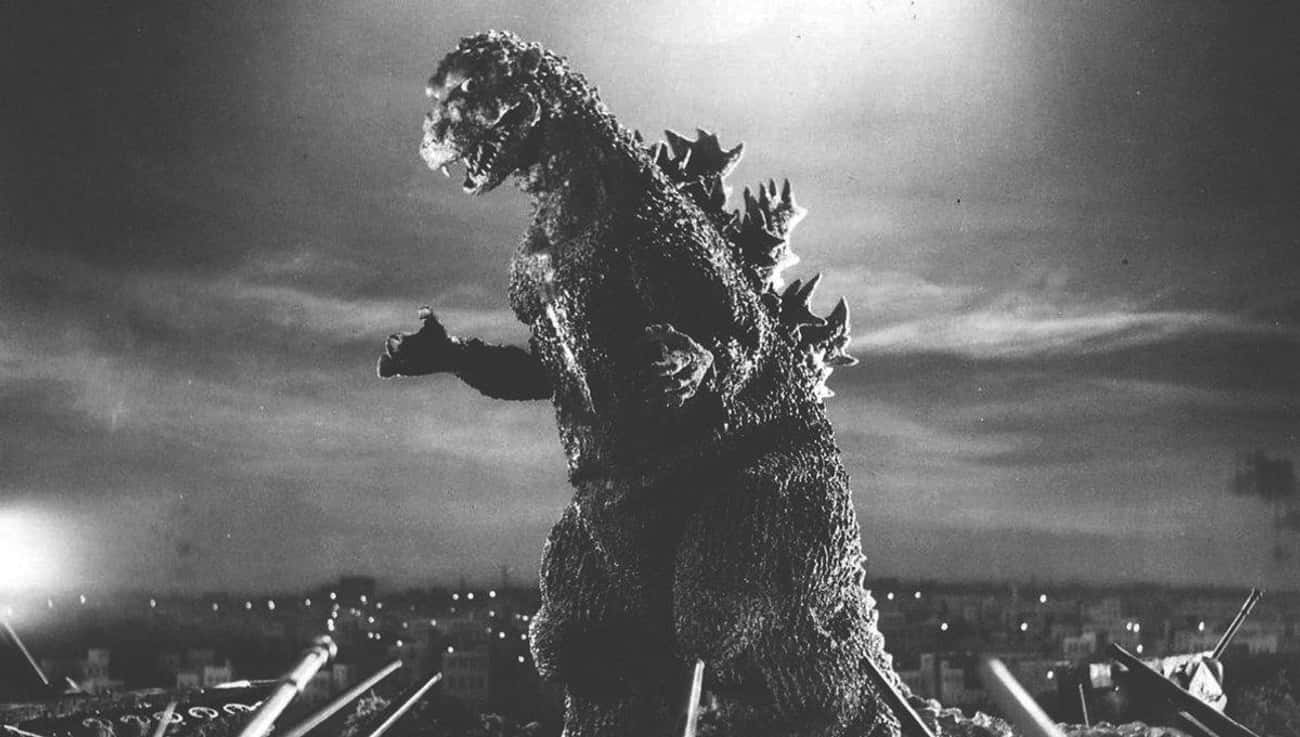
The original look for Godzilla (called "Gojira" in Japan) came from the minds of Teizo Toshimitsu and Akira Watanabe under the supervision of Eiji Tsuburaya. The first designs were closer to a whale, based on the fact that Gojira is aportmanteau of the Japanese words for gorilla (gorira) and whale (kujira). These concepts were scrapped in favor of a more dinosaur-like design, which is what made it to the final film.
Efforts were made to make the creature look less humanoid or mammalian, but initial designs that featured a head resembling a mushroom cloud were scrubbed - perhaps because it made the theme of nuclear proliferation and conflict too on-the-nose. Eventually, the final design incorporated elements of theIguanodon,Stegasaurus, andTyrannosaurus, all of which were combined into a rubber suit to be used in a "suitmation" performance.
While the first film establishes Godzilla's height at approximately50 meters (164 feet), this would change over the years as the buildings he demolished got taller and taller.
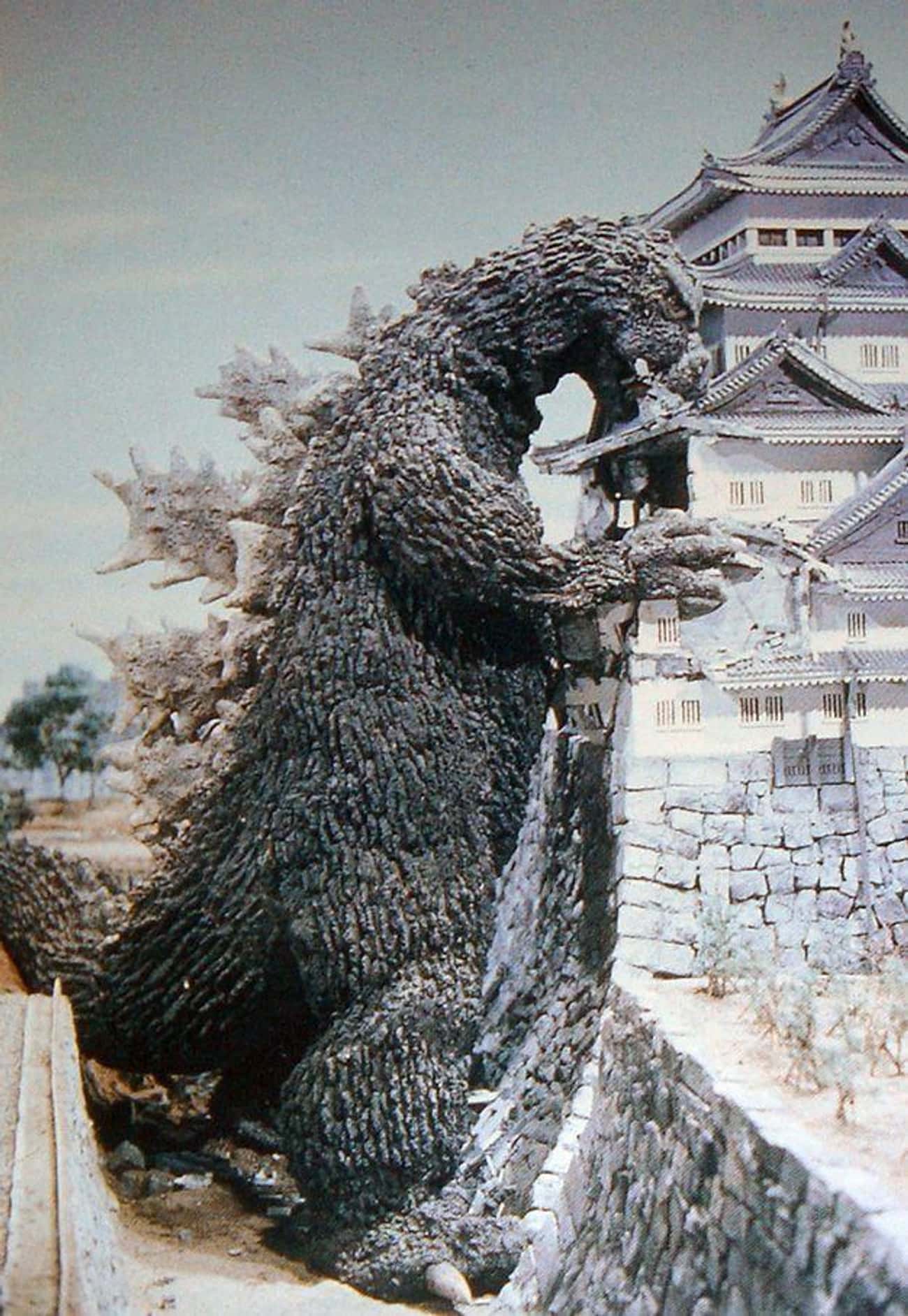
By the time the fourth film, Mothra vs. Godzilla,hit screens in 1964, Godzilla's design received a slight upgrade in the way the suit was constructed. This is the suit that appears throughout most of the film, though the suit from the previous films was still used for water scenes and a scene of the monsters tumbling off a cliff.
Godzilla's look in this film isn't radically different from his previous outings, but modifications to the material and construction enabled his actor, Haruo Nakajima, to move more naturally. The lighter suit included reinforced heels in the feet, so Nakajima could actually flip and jump. This more agile Godzilla seemed like a completely upgraded monster, and the fans ate it up. Subsequent films would feature more action, and push the franchise's tone into campier territory.
Godzilla's height in Mothra vs. Godzilla remained the same as it did in the first three films. He wouldn't receive asize boostuntil the mid-1980s.
The 1970s were all about campy fighting between kaiju, taking the scarier elements from the original films and tossing them out the window. That's not to say the films weren't incredibly popular, but they were considerably different from the earlier allegories about the dangers of nuclear conflict.
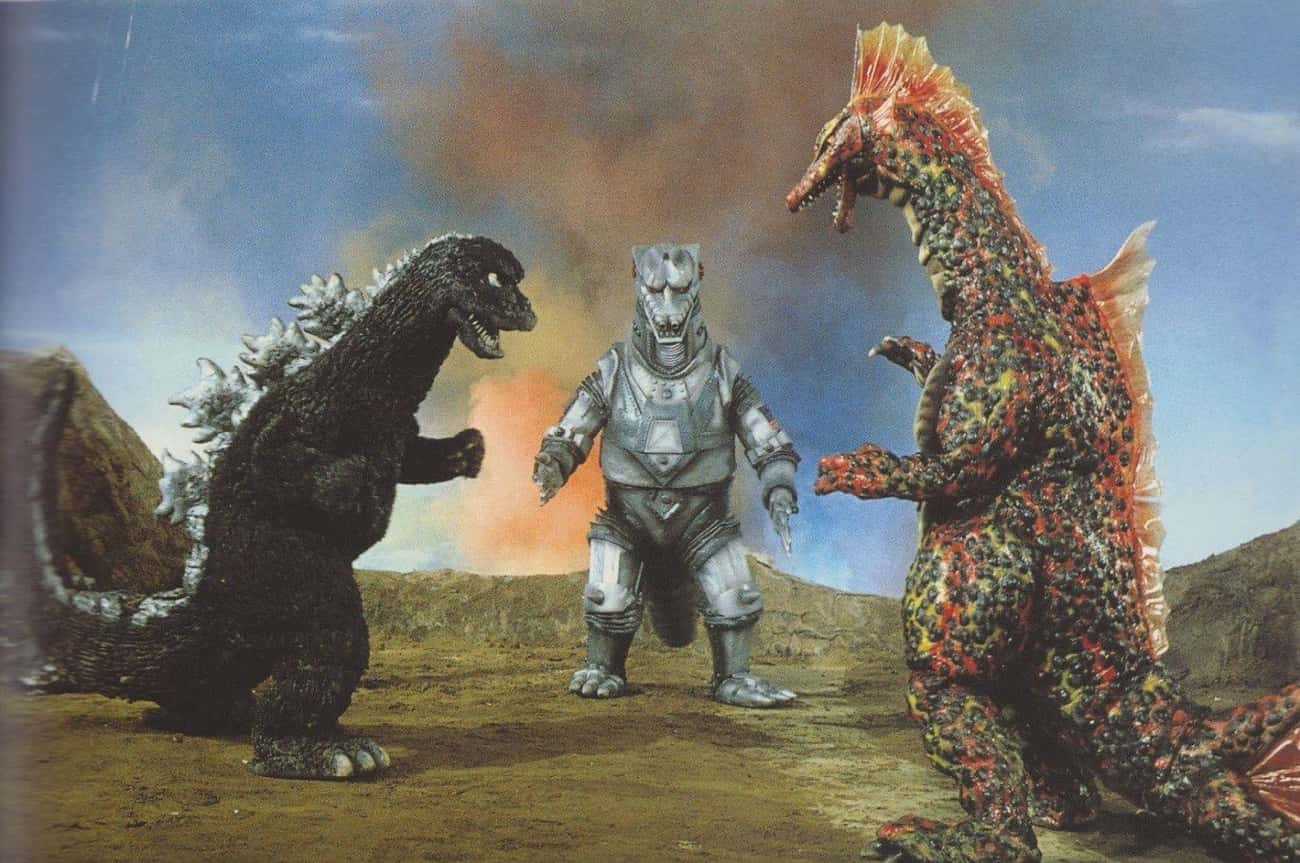
One of the biggest changes made to Godzilla and the monsters of this era occurs inTerror of Mechagodzilla.From this film onwards, many of the kaiju sport large anime-like eyes. This makes the creatures less frightening, yet considerably more marketable to a younger audience.
In his book,Godzilla on My Mind: Fifty Years of the King of Monsters,William Tsutsui summed up the more marketable changes like so: "That Godzilla wasn't scaring anybody. In fact, you wanted to take it home as a pet."
In 1984, the indomitable kaiju was redesigned to bring him closer to his horror roots. Gone were the campy, oversized eyes, and in their place loomed a darker, more frightening visage. Godzilla's height was also increased significantly. Whereas the monster of the 1950s and '70s stood at 50 meters, his 1984 incarnation was 80 meters (262 feet) tall.
These changes to Godzilla were made in the wake of theThree Mile Island event, which saw an increased level of worldwide awareness regarding the dangers of nuclear radiation. Series creator Tomoyuki Tanaka used this event to help launch the reboot, and once again embrace the grimmer tone of the '50s.
Everything from the previous decade, from the more fantastical approach to the giant monster slug fests, was gone. The '80s belonged to an antagonistic Godzilla who stomped on buildings for fun.
The 1990s saw another redesign of Godzilla, but he wasn't the only monster to get an upgrade. His son - named Minilla or Minya, depending on which version you watch - was also given a redesign.
Minilla was altered from his previous, dinosaurian visage and given a more cartoony overhaul. It is rumored that this was done in the hopes oflaunching a Saturday morning cartoon seriestentatively entitled Little Godzilla's Underground Adventure, but if so, the project never materialized.
Godzilla's changes in this film were more pronounced than recent alterations. His build was much stockier, and the shape of his body took on a triangular build thanks to wider shoulders with less-pronounced ribbing on the neck. His eyes were enlarged once more and given a more prominent whiteness around the pupils (though it still didn't make him look as cartoony as it had previously). Like other films in the franchise, suits from the previous films were used for water entrances and exits, as well as some scenes involving Godzilla being thrown through the air.
In terms of height, Godzilla received yet another upgrade. His stature was increased by 20 meters to100m in total(328 feet), where it would remain until the 1998 American reboot.
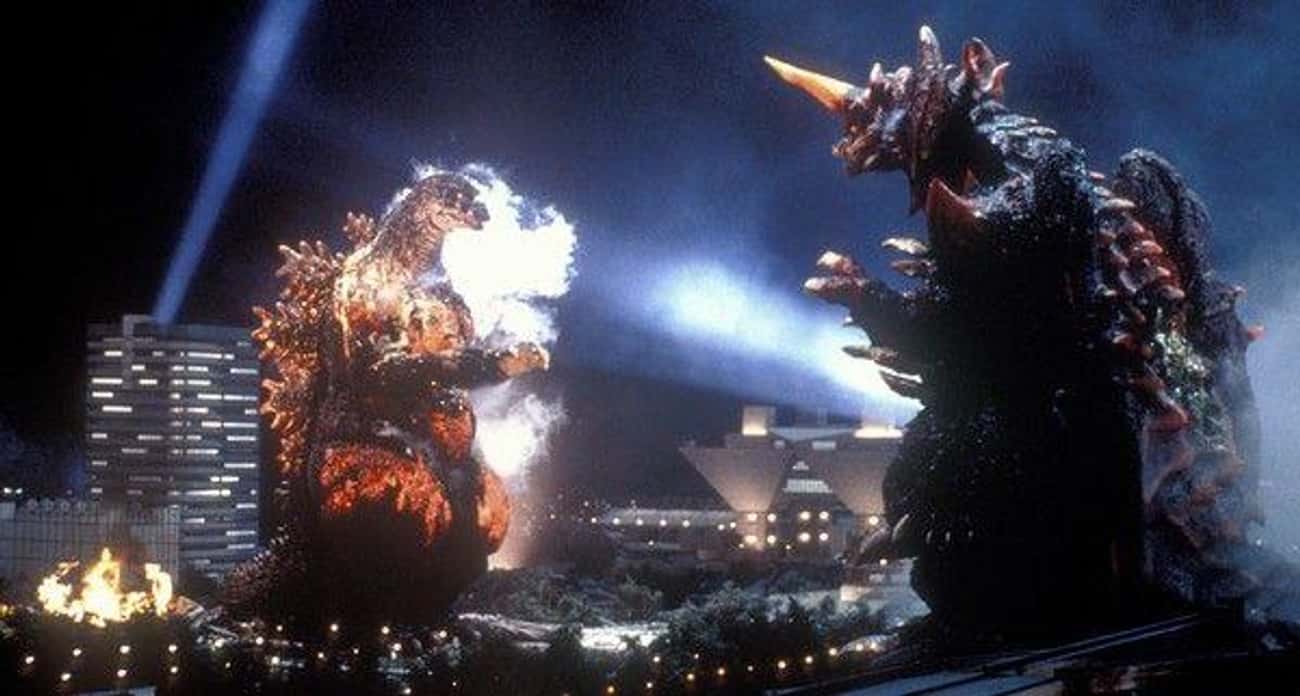
When the previous two films failed to achieve the box office numbers the producers were hoping to see, the idea of eliminating Godzilla inGodzilla vs. Destroyahwas floated in 1995. The demise was temporary, but it offered an opportunity to close out one era so another could begin.
Many of the changes made to Godzilla's appearance in this film are incidental to the plot, which centers around Godzilla's heart - likened to a nuclear reactor - approaching its limit and threatening the entire world. To achieve these effects, Godzilla's coloration is altered to include several glowing aspects, and reveals a clear correlation between his ill-fated ticker and his physical features.
Godzilla's height remains the same in this film, but his spinal protrusions are slightly increased. This was done via the inclusion of 200 incandescent lights spread along the ridges and over portions of the skin. Technically, the suit was the same one used inGodzilla vs. SpaceGodzilla, but the added changes altered his appearance. This made him appear somewhat larger, and added to the overly irradiated look.
In 1998, director Roland Emmerich released a movie which technically stands as the 23rd film in the Godzilla franchise. However, it differs so much from the originalGodzillamovies that it has been vastly rejected by fans. The appearance of the monster from this film is so different, the Japanese release titled it simply Zilla, intending to separate it from the greater franchise.
This film is the first to feature a CGI Godzilla, and with that new technology came numerous changes to the monster's characterization. Here, he's faster, sleeker, and more agile than ever before. He's also reduced in height to 55 meters (180 feet) - only 5 meters taller than the original version.
Emmerich famously hated the design of Godzilla from previous movies, even going so far as to say it "didn't make sense." When it came to designing his monster, he made numerous changes to the first designs presented to him. As he explains:
I saw the creature that they designed for [TriStar’s first attempt]. Jan De Bont created a Godzilla that was very close to the original, but it was not right because today we wouldn’t do it like that. I didn’t want to make the original Godzilla, I wanted nothing to do with it. I wanted to make my own.
Godzilla 2000: Millennium was the second Toho reboot of the franchise, and the 23rd film to come out of the studio. It was crafted as a reintroduction of the character, and all previous incarnations were ignored to make way for the reboot. This makesGodzilla 2000a direct sequel to the original 1954 Godzilla.
The redesigned kaiju was decreased in size to his original height of 50 meters. Other changes to the suit incorporated elements used in the 1962 film King Kong vs. Godzilla. The spines along his back and tail were enlarged and increased in number, and his features were made to look more reptilian. His eyes were returned to a more villainous yellow color and were shrunk from the enlarged versions seen in previous films.
In many ways, the monster looked more like his original incarnation, but with a more rugged look. This was a more dangerous, deadlier Godzilla.
Godzilla, Mothra and King Ghidorah: Giant Monsters All-Out Attackwas thethird film releasedin the new millennium period, making it another direct sequel to the original film. The plot saw Godzilla return to an antagonistic role thanks to his being possessed by the souls of the soldiers from WWII. Other monsters team up to stop him in the film, which hearkens back to the campy era of the 1970s. The overall tone, however, remains dark and brooding like the films of the 1950s and '60s.
Interestingly, the changes made to Godzilla are only apparent due to the changes made to all the other monsters. To make Godzilla seem more powerful, the heights of Ghidora and Baragon were reduced while Godzilla's was only slightly increased. The possession storyline also affected the monster's eyes. Instead of the yellow coloring seen in the previous two films in the period, his eyes in this version are black with whitened irises and no pupils, giving him a ghostly look.
Godzilla's atomic breath was also modified for this film. After appearing orange with a spiral effect in previous movies, it returns to its signature blazing blue.
For Godzilla's 50th anniversary, Toho released the sixth and final installment in the millennium period, Godzilla: Final Wars. The move was a big event in Japan and throughout the world - and earned Godzilla a star on theHollywood Walk of Fameprior to its world premiere.
Godzilla's height inFinal Wars is unchanged from previous millennium era films, but his eyes and tail are notably altered. In this film, his tailextends slightly above the ground, which gives him a more agile look. Before, the tail simply dragged behind him as he walked (attempts were made in previous years to elevate the tail, but this proved difficult to pull off due to the weight constraints on the actor).
The color of Godzilla's eyes is shifted back to their original yellow instead of white, making him look more menacing as a result.
Godzilla returned to Hollywood in 2014 with a completely new redesign and in a rebooted series, which kicked off Legendary's MonsterVerse.
After the criticism of the 1998 film, efforts were made to ensure the monster and general tone of his film matched the original Japanese Toho films from the 1950s and '60s. Regarding Godzilla's appearance, producerThomas Tullsaid, "We had to make triply sure we got it right. Godzilla had to look like Godzilla. Period."
The mighty kaiju was given a significant boost in height, growing from a relatively small 50 meters to a whopping150 meters(492 feet). This was the largest Godzilla that had ever been in any live-action film.
The new design was spearheaded by directorGareth Edwards, who said, "The way I tried to view it was to imagine Godzilla was a real creature and someone from Toho saw him in the 1950s and ran back to the studio to make a movie about the creature and was trying their best to remember it and draw it. And in our film you get to see him for real."
This Godzilla's facial features are far more streamlined than in the Toho works, which is partially the result of the use of CGI instead of a rubber suit. CGI also enables the monster to be more agile and faster than in previous movies, despite being significantly bulkier.
Japan took back the reins on its most popular kaiju in 2016 thanks to an agreement with Legendary, which didn't limit domestic releases of the popular character.Shin Godzilla features a vastly different version ofGodzilla, who is rendered in CGI via motion capture technology. This keeps the movements of the creature to the style seen in previous Toho films, while adding the special effects wizardry of the modern era.
In this film, Godzilla evolves to become deadlier each time he is bombarded. Due to this change to the creature's nature, his look changes vastly throughout the film. The monster first appears as a red, bipedal monster before retreating into the sea. When he returns, he has doubled in size and can fire atomic blasts from both his mouth and dorsal plates.
Visually, the titan evolves throughout the film, but still retains the look familiar to fans. His tail is more animated and doesn't drag along the ground, and his veins can be seen through his skin. His internal body is flowing with red energy, and his facial features are modified to appear more vicious. He's generally more monstrous in this form than he has been in previous films.
Godzilla: Planet of the Monsters was the first of Toho's animated features and the 32nd film in theGodzillafranchise. Because the film is entirely animated, the artists had a field day with the design of the titular character. In the anime, Godzilla stands a massive300 meters tall(984 feet), the largest he has ever appeared in the franchise. Every aspect of his appearance is likewise enhanced to make him appear larger and more visually stunning.
Godzilla's dorsal plates are lengthened and increased in number, and his tail is likewise lengthened and allowed to swoop off the ground to extend to nearly his full height. His musculature, too, is ridged to appear more impressive. Everything about this Godzilla screams "enhanced," and the design would remain for the subsequent two films in the Tohoanimated trilogy, which includes Godzilla: City on the Edge of Battle and Godzilla: The Planet Eater.
2019 ushered in the second film in the expanded MonsterVerse to feature Godzilla, Godzilla: King of the Monsters. A few design changes were made to the king of all kaiju via director Michael Dougherty. Dougherty used the previous film's design as a base, then added the dorsal plates from the original 1954 film, and made the claws and feet larger. These tweaks make Godzilla appear larger and more predatory, even though his overall height is unaltered.
Making Godzilla and the other kaiju in the film seem more monstrous and godly wasimportant to the director. "Primitive man saw these creatures, and you want to give them a presence that would make him drop to his knees and bow to this god," he said. "It can't just look like big dinosaurs. Jurassic Park has that covered. These have to be distinct. They have to be their own thing. They're Titans."
These design changes may remain when the third film in the series, Godzilla vs. Kong, makes its way to theaters in 2020. However, it would not be surprising to see the big G undergo some slight redesigns before the title match.