OLDEST CHEESE FOUND in 3,200-year-old Egyptian tomb hides a pathogenic secret
Story by Tibi Puiu
•1h•3 min read
Archaeologists have uncovered what may be the oldest cheese ever found—dating back 3,200 years—in the tomb of an Egyptian mayor. But this ancient dairy delight comes with a deadly twist.
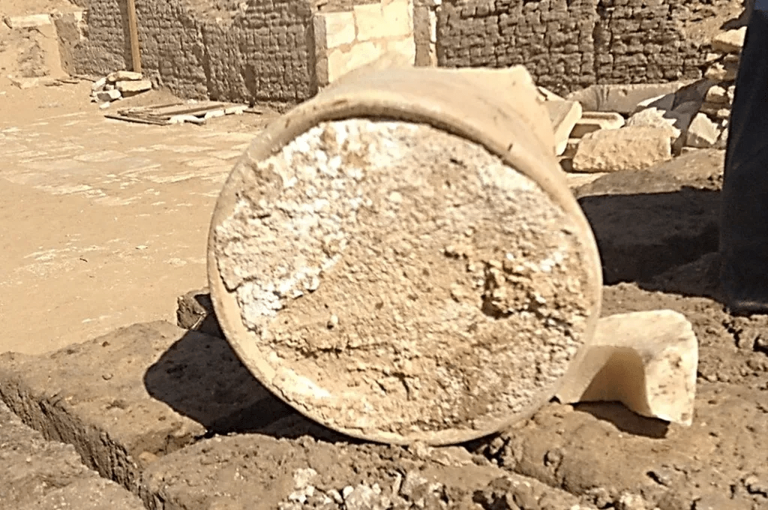
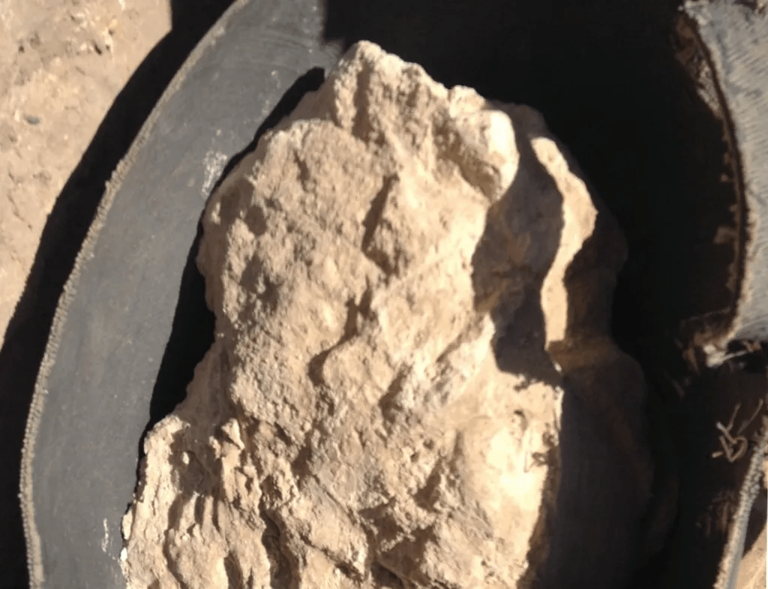
The cheese, found in the tomb of Ptahmes, a mayor of Memphis in ancient Egypt, was discovered during an excavation that began over a decade ago. Archaeologists from the University of Catania and the Cairo University in Egypt encountered a mysterious white substance inside a broken jar. Initially, they suspected it might be an ancient food item due to the jar’s covering of canvas fabric.
Further proteomic analysis made public ina new study out last monthrevealed that the substance was indeed a dairy product, made from a mixture of sheep, goat, and cow milk. The researchers concluded that the cheese was likely spreadable and highly perishable, similar to modern-day chevre but more acidic. However, it wasn’t only cheese they found.
Aged Cheese with a Dark Secret
The proteomic analysis employed by the researchers at Peking University in China allowed them to identify specific peptides, which are short chains of amino acids, within the ancient sample. These peptides pointed to the presence of milk proteins from both sheep or goats and cows. The findings indicate that the cheese was likely a mix of different types of milk, which could suggest a complex dairy culture in ancient Egypt.
Previously, scientists traced milk proteins in the tooth tartar of a 3,200-year-old,showing that dairy was consumed at the time— and in addition, whey and curd proteins were also recovered, indicating that people didn’t solely drink the milk but may have also prepared it into cheese. The oldest direct evidence of cheese-making dates back to 5500 BC in Kujawy, Poland.
However, the discovery at Memphis is the most ancient archaeological solid residue of cheese ever identified. The tomb is located at the Saqqara necropolis near Cairo. After being first unearthed in 1885, the tomb was lost to shifting sands until it was rediscovered in 2010.
“The material analyzed is probably the most ancient archaeological solid residue of cheese ever found to date,” said Dr. Enrico Greco, from the University of Catania.
“We know it was made mostly from sheep’s and goat’s milk, but for me it’s really hard to imagine a specific flavor,” he added.
A more alarming find tempered the excitement of this discovery. The cheese contained traces ofBrucella melitensis, a bacterium responsible for brucellosis, a disease that can cause severe symptoms, including fever, arthritis, and fatigue. The presence of this pathogen underscores the potential dangers that ancient foods can harbor — a sobering reminder of the perils of historical culinary practices when people had no notion of microbes.
Brucellosis is a disease that still affects many parts of the world today. Its presence in this ancient cheese provides the earliest direct biomolecular evidence of the disease during the Pharaonic period. Previously, only indirect signs of brucellosis had been identified in Egyptian archaeological remains.
While the identification ofBrucella melitensisin the cheese sample is compelling, the researchers caution that further studies are needed to confirm this finding conclusively. Nonetheless, this discovery highlights the potential of proteomic analysis in uncovering not just what people ate in the past, but also the diseases they encountered.
Thank You for the doors you've opened and the boundaries you've broken. ~~~unknown
Stagecoach Mary Fields
By Shelby Amspacher; Intern, Department of Education and Visitor Services
Standing six feet tall and powerful, many bandits learned to stay clear of Stagecoach Mary in the American Old West. Stagecoach Mary Fields carried a gun, smoked, drank and had a wicked temper. Mary was the first African American woman to carry mail on a Star Route for the United States Post Office Department.
Mary Fields was born into slavery in either 1832 or 1833; her exact birthday is unknown. Mary's birthplace and other details about her early childhood are also unknown. What is known is that she worked for the Warner family in West Virginia in the years leading up to the Civil War. Mary was emancipated in 1863 or shortly after the Civil War; she then moved from West Virginia and went up the Mississippi River where she worked on steamboats.
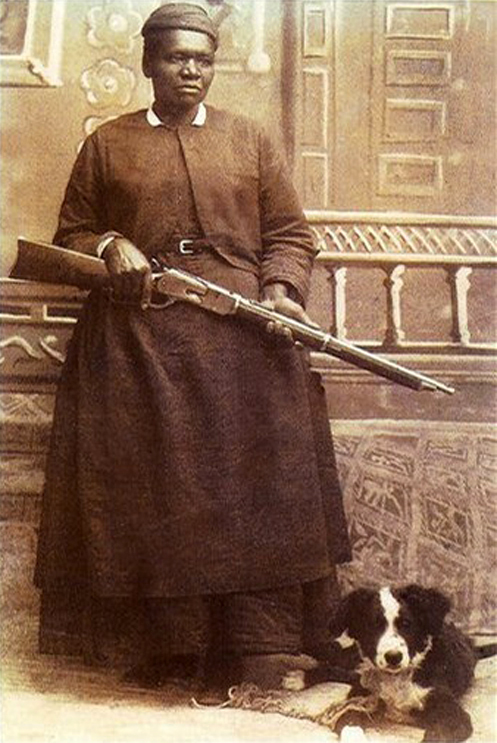
An undated photo of Mary Fields
Mary ended up in Ohio, specifically Toledo. There, Mary began working at Ursuline Convent of the Sacred Heart. There is debate over how and why Mary ended up working at the convent. Yet, what is known is that Mary’s gruff style was not something that fit into the serene calm that was the convent.
During her time at the convent, Mary washed laundry, bought supplies, managed the kitchen, and grew and maintained the garden and grounds. Mary was known to lose her temper and was quick to yell at anyone who stepped on the grass after she had cut it.
It is unclear why Mary left Toledo. Many sources think that she moved to take care of an ill friend. Mother Amadeus Dunne, who had been Mother Superior in Toledo before moving West, had fallen ill. Mary and Mother Amadeus were known friends. Some records date their friendship all the way back to the Warren family in West Virginia, though this claim is not substantiated.
Once she arrived West, Mary got to work. Mary mainly worked for Saint Peter's Mission near Cascade, Montana where she did many of the jobs she had done before in Toledo. This mission was run by Ursuline nuns and was where Mother Amadeus Dunne resided. Mary performed maintenance and repair work. She also gardened and did the laundry. One major thing that Mary was also in charge of was the locating and delivery of supplies needed for the mission. Yet Mary had no official contract with the mission and nuns; thus, she was free to come and go as she pleased, taking additional work outside the mission.
Mary was unfortunately dismissed from the mission. This was due in part to her crass behavior, unruly temper and penchant for drinking and smoking in saloons with men. The final straw appears to involve an argument in which Mary and another mission janitor, a male, got into a fight and were agitated to the point that both drew guns. While neither ever fired their gun, this incident was enough to make the Bishop of the area demand for the nuns to relieve her duties.
Mary moved to neighboring Cascade, Montana, where she tried but failed to open one or more eateries. They were said to have failed due to her giving nature of allowing folks who could not pay to eat for free. Mary also reportedly set up a laundry shop and did other odd jobs to make money. It is around this time that Mary’s drinking, gun toting, and smoking become well known to the townspeople of Cascade.
In 1895, in her early sixties, Mary obtained a contract by the United States Post Office Department to be a Star Route Carrier. A Star Route Carrier was an independent contractor who used a stagecoach to deliver the mail in the harsh weather of northern Montana. Mary was the first African American woman and the second woman to receive a Star Route contract from the United States Post Office Department. This contract was secured with the help of the Ursuline nuns. The nuns wished to look out for Mary as they felt connected with her. This was because they did not wish to see her go as the nuns heavily relied on Mary for work done around the mission.
Mary built a reputation of being fearless while working as a mail carrier. Mary’s job was not only to deliver the mail but to also protect the mail from bandits, thieves, wolves and the weather as well. Mary gained her nickname “Stagecoach Mary” due to her use of a stagecoach as a method of transportation to deliver the mail. Mary was also known for the guns she carried. During the time that Mary was delivering the mail, she was known to carry both a rifle and a revolver.
Mary spent eight years delivering the mail as a Star Route Carrier. During this time, Mary became beloved by the locals of Cascade, Montana for her fearlessness and generosity, as well as for her kindness to children. Mary retired from being a Star Route Carrier in the early 20thcentury. After her retirement, Mary settled into life in Cascade, Montana.
Upon retiring, Mary started a laundry business in town. She also opened an eatery as well as babysat the local children. She remained famous, even becoming the mascot for the town’s baseball team. Mary was beloved by the people of Cascade, so much so that she drank in saloons for free and ate for free at local restaurants and hotels.
Mary Fields died on December 5, 1914. After her death, the townspeople raised money to have her buried in a cemetery on a road she drove frequently that linked Cascade to the mission. Mary’s funeral was said to be one of the largest in town.
Mary’s legend grew after her death. She was made a hero; a symbol of female black empowerment. Yet how did Montanans truly know about her during her time in Cascade? Were people capable of understanding the autonomy, persona, and character of a freed, literate African American woman who did not conform to the ideals put on her by society?
Mary drank and wore men’s clothing at times, she smoked and carried guns. Yet in death she has become this powerhouse woman. Mary had the ability to become the first African American woman Star Route Carrier during a time when the West was a predominantly white society, which says something to Mary’s relentless character and larger than life personality. How did this all make her feel?
Shelby Amspacher is a current student at the George Washington University, where she is working on her master’s in Museum Education. She received her undergraduate from Hood College, where she majored in Art and Archaeology with a concentration in Archaeology and minored History. This spring, Shelby is interning with the Department of Education and Visitor Services. Shelby has enjoyed exploring postal history and helping to facilitate Story Time at the museum. Shelby is looking forward to her graduation in July!
Sources:
Blakemore, Erin. “Meet Stagecoach Mary, the Daring Black Pioneer Who Protected Wild West Stagecoaches.” History.com, A&E Television Networks, 14 September 2017, (history.com/news/meet-stagecoach-mary-the-daring-black-pioneer-who-protected-wild-west-stagecoaches).
Cowen, Nadia. “`Stagecoach' Mary Fields (1832-1914).” Chicagotribune.com, 26 August 2018, (chicagotribune.com/news/ct-xpm-2004-03-03-0403030068-story.html).
“Finding Mary Fields: Race, Gender, and the Construction of Memory.” Portraits of Women in the American West, by Dee Garceau-Hagen, Taylor and Francis, 2013, pp. 121–148.
Hardaway, Rodger D. “AFRICAN-AMERICAN WOMEN ON THE WESTERN FRONTIER.” Negro History Bulletin, vol. 60, no. 1, Jan. 1997, pp. 11–12., jstor.org/stable/24766796.
"Mary Fields." Britannica Academic, Encyclopædia Britannica, 1 Feb. 2018. academic.eb.com/levels/collegiate/article/Mary-Fields/630727. Accessed 18 February 2020.
Pickett, Mary. “'Stagecoach Mary' Cuts Colorful Swath.” The Billings Gazette, 8 February 2009 (billingsgazette.com/news/features/magazine/stagecoach-mary-cuts-colorful-swath/article_c3a25388-8991-5cf4-a505-01374274e6ad.html).
Reindl, JC. “'Stagecoach Mary' Broke Barriers of Race, Gender.” Toledo Blade, 8 February 2010 (toledoblade.com/local/2010/02/08/Stagecoach-Mary-broke-barriers-of-race-gender.html).
Shiloh, Tamara. "Rough and Tough, Stagecoach Mary Got the Mail Delivered in Rugged Montana." Oakland Post, Oct, 2019, pp. 2. ProQuest, search.proquest.com/docview/2313024407?accountid=46638.
“Star route.” Merriam-Webster.com Dictionary, Merriam-Webster, merriam-webster.com/dictionary/star%20route. Accessed 18 February 2020.